



What Are Apartment Floor Plans? A Quick Guide
Apartment floor plans are scaled diagrams that show the layout, room arrangement, and dimensions of a residential unit. Whether you're renting your first place or upgrading to something bigger, understanding floor plans helps you make a smarter decision before you ever step inside.
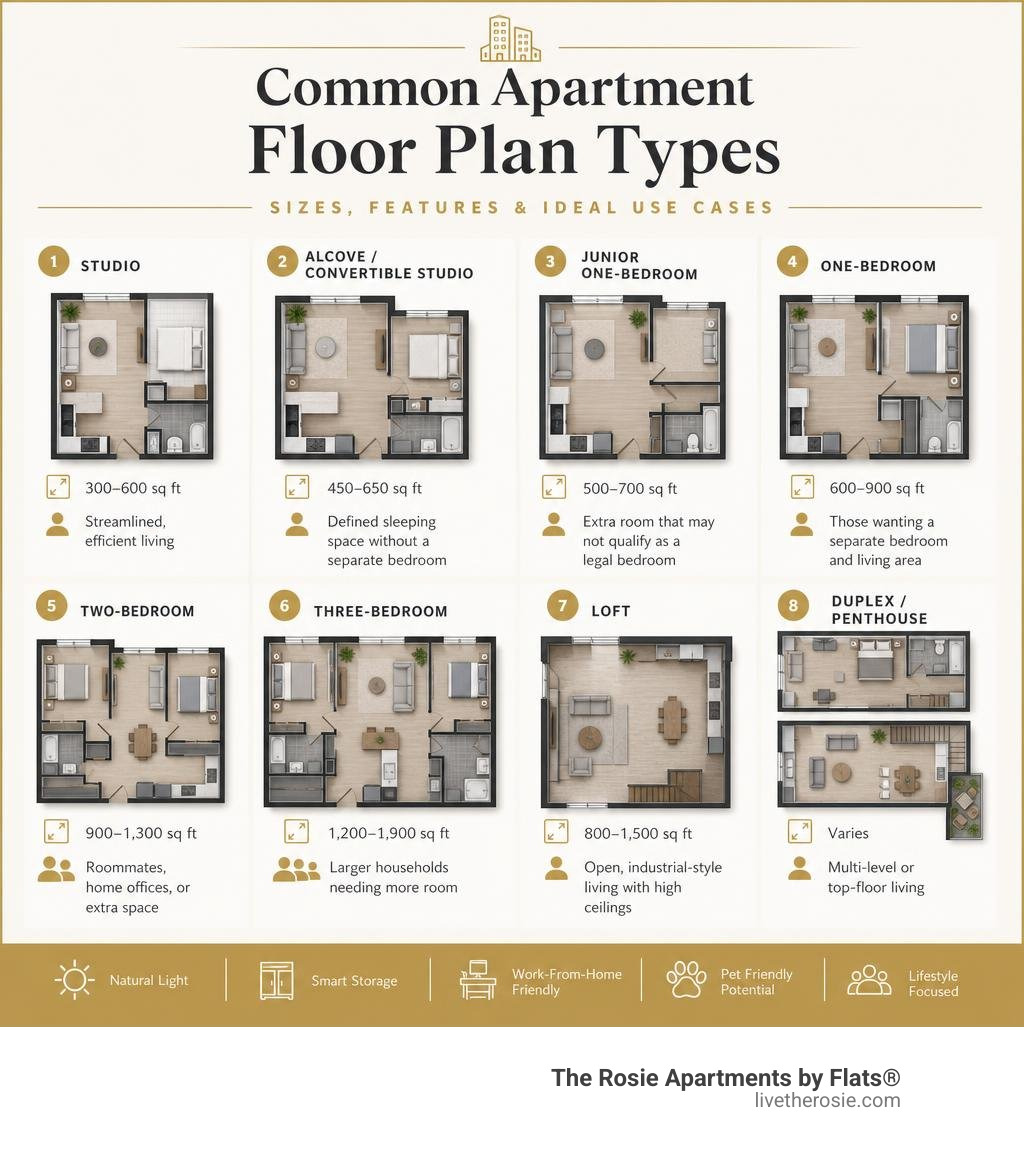
Here are the most common apartment floor plan types:
| Floor Plan Type | Typical Size | Best For |
|---|---|---|
| Studio | 300–600 sq ft | Streamlined, efficient living |
| Alcove/Convertible Studio | 450–650 sq ft | Defined sleeping space without a separate bedroom |
| Junior One-Bedroom | 500–700 sq ft | Extra room that may not qualify as a legal bedroom |
| One-Bedroom | 600–900 sq ft | Those wanting a separate bedroom and living area |
| Two-Bedroom | 900–1,300 sq ft | Roommates, home offices, or extra space |
| Three-Bedroom | 1,200–1,900 sq ft | Larger households needing more room |
| Loft | 800–1,500 sq ft | Open, industrial-style living with high ceilings |
| Duplex/Penthouse | Varies | Multi-level or top-floor living |
Choosing the right floor plan shapes how your daily life actually feels — from how much natural light you get, to whether your pet has room to roam, to whether you can fit a work-from-home setup without sacrificing your living room.
The average new U.S. apartment has shrunk from around 1,000 sq ft in 2010 to about 950 sq ft as of 2023. That means layout and flow matter more than ever, not less.
This guide breaks down every major floor plan type, what to look for, and how to match a layout to the way you actually live.
Understanding Common Apartment Floor Plans and Layouts
Navigating apartment floor plans requires a clear understanding of how different spaces function. The layout of a home dictates daily movement, furniture placement, and overall comfort. From compact urban options to sprawling multi-level layouts, each configuration offers distinct advantages depending on lifestyle requirements.
Studio and Convertible Apartment Floor Plans
For those seeking an efficient and streamlined lifestyle, studio layouts are a highly popular choice. A standard studio apartment typically consolidates the living room, bedroom, and kitchen into a single open area, with only the bathroom enclosed. In major metropolitan areas, studio apartments now represent a significant portion of new housing starts.
To explore how these layouts maximize every inch, a comprehensive look at Studio Apartments in Pilsen reveals how modern design turns compact footprints into highly livable spaces.
An alcove studio, sometimes referred to as a convertible studio, offers a slight variation by featuring an L-shaped layout or a recessed nook. This structural recess allows for a designated sleeping area that can be easily screened off with bookshelves, curtains, or sliding panels, creating a visual distinction between day and night zones without the need for a full wall.
Taking this concept a step further, Expandable Apartments in Chicago showcase the cutting edge of space optimization. These units utilize movable wall systems and multi-functional furniture to transform a living area into a bedroom or workspace on demand, answering the challenges of modern urban density with creative engineering.
Multi-Bedroom and Loft Apartment Floor Plans
When more space is required, multi-bedroom configurations provide the necessary separation for roommates, home offices, or growing households. A standard one-bedroom unit features a fully enclosed bedroom with a door, ensuring complete privacy from the kitchen and living areas. For a detailed exploration of these layouts, the guide to One-Bedroom Apartments in Pilsen highlights how these spaces balance open-concept living with private retreats.
For those requiring even more versatility, looking into a Two-Bedroom Apartments Pilsen Guide demonstrates how larger floor plans accommodate diverse living arrangements. In two-bedroom layouts, the "split-bedroom" configuration is highly sought after. This design places the living room and kitchen in the center of the unit, with the bedrooms situated on opposite sides. This layout maximizes privacy by eliminating shared bedroom walls, making it ideal for roommates or those who work from home and need a quiet office space.
Loft apartments offer a completely different aesthetic, characterized by high ceilings, exposed brick or concrete, and large industrial-style windows. Often converted from historic warehouse buildings, lofts frequently feature elevated platforms or mezzanine levels. Examining 1-Bedroom Loft Apartment Floor Plans shows how vertical space can be utilized to create a distinct sleeping loft while keeping the lower level completely open and airy.
Beyond these classic configurations, several specialized layouts exist across older and newer buildings alike:
- Duplexes and Triplexes: Apartments spread across two or three levels, connected by an interior staircase. These layouts mimic the feel of a multi-family townhouse while remaining within a managed building structure.
- Penthouses: Positioned on the top floors of high-rise buildings, these premium units often feature expansive floor plans, upgraded finishes, floor-to-ceiling windows, and private outdoor terraces.
- Railroad Apartments: Commonly found in historic brick buildings, these units feature rooms lined up in a straight row, requiring residents to walk through one room to reach the next.
- Floor-Through Layouts: Units that occupy the entire width of a building from front to back, offering windows on opposite walls for exceptional cross-ventilation and natural light.
- Garden-Level Units: Partially or fully below street level, these apartments often provide direct access to backyards or courtyards, though they may receive less direct sunlight.
To see how these concepts translate to various regional designs, one can examine the spacious layout of the Hillside - Linville Floorplan (2 Bed, 2.5 Bath) | The Lofts at Little Creek Apartments in Winston-Salem, North Carolina or the highly functional B2 Floorplan | Ellevate St. Ives Apartments in North Charleston, SC .
How Building Types and Locations Shape Layouts
The age of a building and its architectural style play a massive role in the design of its apartment floor plans. Walking into a pre-war building feels entirely different from stepping into a sleek, newly constructed high-rise, largely because of historical building practices and structural requirements.
Pre-War Buildings (Built before World War II): These properties are famous for their solid construction, plaster walls, crown molding, and hardwood floors. Because these structures were built before central air conditioning and modern steel-frame engineering became standard, their floor plans are typically characterized by distinct, compartmentalized rooms. Long hallways separate the kitchen from the living area to keep cooking heat and odors contained.
A classic example of pre-war luxury is the "Classic Six" layout, which typically includes a formal living room, a dining room, a kitchen, two primary bedrooms, and a smaller utility room or nursery. These layouts prioritize privacy and formal hosting, but they often lack the open flow desired by modern residents.
Post-War Buildings (Built late 1940s to 1980s): As urban populations surged after the war, construction methods shifted toward speed and efficiency. Post-War buildings often feature white-brick facades, lower ceilings, and simpler, more standardized layouts. Hallways were shortened to maximize usable square footage within the units, and kitchens began opening up slightly to the dining areas, marking the early transition toward open-concept living.
New Construction (Modern Developments): Modern residential design focuses heavily on maximizing light, air, and social connection. Steel and concrete framing allow for wide, column-free spaces and massive floor-to-ceiling windows. Walls are kept to a minimum, resulting in flowing kitchen-dining-living zones where cooking, dining, and relaxing happen in one continuous space. Modern construction also integrates utility closets, in-unit laundry hookups, and integrated smart-home tech directly into the initial blueprint.
| Feature | Pre-War Layouts | Post-War Layouts | Modern New Construction |
|---|---|---|---|
| Kitchen Style | Enclosed, separate room | Semi-open galley kitchen | Open-concept with island |
| Room Definition | Highly compartmentalized | Moderate separation | Fluid, multi-functional zones |
| Ceiling Height | High (often 9+ feet) | Standard (8 feet) | Variable (9 to 11+ feet) |
| Window Size | Medium, deeply recessed | Standard sliding/double-hung | Floor-to-ceiling glass walls |
| Storage | Shallow closets, pantry | Standard wall closets | Walk-in closets, built-ins |
Key Features to Evaluate in a Floor Plan
When reviewing apartment floor plans on a screen or paper, it is easy to get distracted by overall square footage. However, a well-designed smaller layout can feel significantly more spacious and functional than a poorly planned larger unit.

When analyzing a potential layout, several critical elements deserve close attention:
Natural Light and Window Placement: The direction an apartment faces and the distribution of its windows dictate how bright the space will be throughout the day. Dual-aspect layouts—where windows are located on opposing or adjacent walls—are highly desirable because they allow light to enter from multiple angles and facilitate natural cross-ventilation. Pay attention to whether bedrooms have direct exterior windows, as some "convertible" layouts rely on frosted glass sliding doors or partial walls to borrow light from the living area.
Storage Solutions: Adequate storage is essential for maintaining an organized, clutter-free home. Look for floor plans that incorporate walk-in closets, linen closets, and dedicated utility spaces. In modern layouts, smart storage solutions like built-in shelving, overhead cabinets, and entryway niches help make the most of every square foot.
Traffic Flow and Circulation: Imagine walking through the apartment during a typical day. Is there a clear path from the entryway to the kitchen without navigating tight corners? Can the bathroom be accessed from the living area without walking directly through a private bedroom? A well-designed floor plan minimizes wasted hallway space while ensuring that high-traffic paths remain unobstructed.
Kitchen Functionality: Over 60% of apartment floor plans in major cities now feature open-concept kitchens. Look for the "kitchen work triangle"—the path between the refrigerator, the sink, and the stove. This path should be clear and relatively short. Kitchen islands or peninsula counters are excellent additions, providing extra prep space, casual bar seating, and additional under-counter storage.
In-Unit Laundry and Utilities: Having a dedicated laundry closet with a washer and dryer is a major convenience. Check where the laundry is situated; having it placed away from the main bedroom or living area helps minimize noise disruption when running a cycle.
Outdoor Space: Private balconies, terraces, or patios extend the living area outdoors and provide a private spot to enjoy fresh air. When examining a floor plan, note the access point for the outdoor space—access through the living room is generally preferred for hosting, whereas access solely through a bedroom offers a more private retreat.
Understanding Apartment Orientation and Building Layouts
The position of an individual unit within the larger building footprint can dramatically influence daily living conditions, noise levels, and views. A floor plan diagram of the entire building level, known as a floor plate, reveals how units are arranged around elevators, stairwells, and shared corridors.
Corner Units: Situated at the ends of hallways, corner units are highly coveted because they feature windows on at least two sides. This dual-aspect design provides superior natural light, better ventilation, and more expansive views. Additionally, because they share fewer common walls with neighbors, corner units tend to be quieter.
Interior Units: These apartments are flanked by neighboring units on both sides, meaning they only have windows on a single wall (single-aspect). While they may have less natural light than corner units, they often benefit from added thermal insulation from surrounding apartments, which can help regulate indoor temperatures.
Proximity to Common Areas: When reviewing a building floor plate, locate the elevators, trash chutes, and stairwells. Units directly adjacent to these high-traffic areas may experience more foot traffic and ambient noise. Conversely, apartments located at the very end of a long corridor offer maximum privacy but require a longer walk to reach the exit.
To see how premium urban developments arrange their units to optimize views, light, and accessibility, explore the layouts at Floor Plans | Apartments in Chicago Loop - Century Tower , view the luxury options at Floor Plans | Luxury Studio & 1, 2 & 3-Bedroom… | One Chicago , or browse the spacious designs at Spacious Luxury Apartment Floor Plans in Chicago, IL .
Frequently Asked Questions about Apartment Floor Plans
What is a railroad apartment floor plan?
A railroad apartment is a layout characterized by a series of rooms connected in a straight line, resembling the cars of a train. In this design, there are no central hallways; to get from the front of the apartment to the back, one must walk directly through each room.
These layouts are commonly found in historic brick walk-ups and brownstones built during the late 19th and early 20th centuries. While they offer a unique vintage charm and often feature historic details like fireplaces and original moldings, they present distinct privacy challenges, making them less ideal for shared roommate situations.
How has the average size of apartment floor plans changed?
Over the past decade, the average square footage of new apartments has steadily declined, reflecting a broader trend toward urban density and efficient space utilization. To offset smaller individual footprints, modern developers place a heavy emphasis on smart layout design, high ceilings, and multi-functional spaces.
Additionally, modern buildings compensate for smaller private units by offering extensive shared community spaces, such as cow-working lounges, rooftop decks, and fitness centers, allowing residents to expand their daily living areas beyond their front doors.
Can apartment floor plans be modified for ADA accessibility?
Yes, apartment floor plans can be customized and built to meet ADA (Americans with Disabilities Act) standards and universal design principles. Key modifications include widening doorways to at least 32 inches of clear width, creating wider hallways, and ensuring adequate turning clearance in kitchens and bathrooms.
Other common adjustments include roll-in showers, grab bar reinforcement, lowered countertops, and pull-out shelving, ensuring that the living space remains comfortable, accessible, and inclusive for everyone.
Conclusion
Finding the perfect home starts with identifying the layout that best supports daily routines and personal preferences. Whether a compact studio, an industrial-style loft, or a spacious multi-bedroom layout is desired, understanding how to read and evaluate apartment floor plans is the key to making an informed decision.
For those looking to experience the perfect blend of modern design and historic neighborhood charm, The Rosie Apartments by Flats® offers stunning luxury apartments in the heart of Chicago's Pilsen neighborhood. Featuring open-concept layouts, premium finishes, and exceptional amenities—including a breathtaking rooftop deck, an outdoor pool, and pet-friendly spaces accommodating up to two pets—these residences are designed to elevate the urban living experience.
Ready to find the ideal layout? Explore Our Floor Plans today to discover the perfect space.


