



Finding Your Perfect Home Together
Apartments allowing large dogs exist, but finding them requires knowing where to look and how to present yourself and your pet effectively.
Quick Answer: How to Find Apartments Allowing Large Dogs
- Use pet-friendly search filters on rental platforms (specify pet-friendly or “no breed restrictions” where available)
- Prepare a pet resume with photos, vaccination records, and training certificates
- Consider pet liability insurance to reassure property managers
- Look for communities with dog amenities like on-site dog parks and washing stations
- Network through veterinarians and local pet owner groups for recommendations
You found a great dog and a great apartment—except the apartment doesn't allow the dog. This scenario plays out thousands of times each year for renters with larger canine companions. The good news is that the number of pet-friendly communities is growing, particularly in urban areas where residents increasingly view pets as non-negotiable members of their households.
The Challenge
Many apartments have weight limitations ranging from 25 to 50 pounds, automatically excluding larger breeds. Breed restrictions compound this challenge, often targeting dogs perceived as aggressive regardless of individual temperament.
The Solution
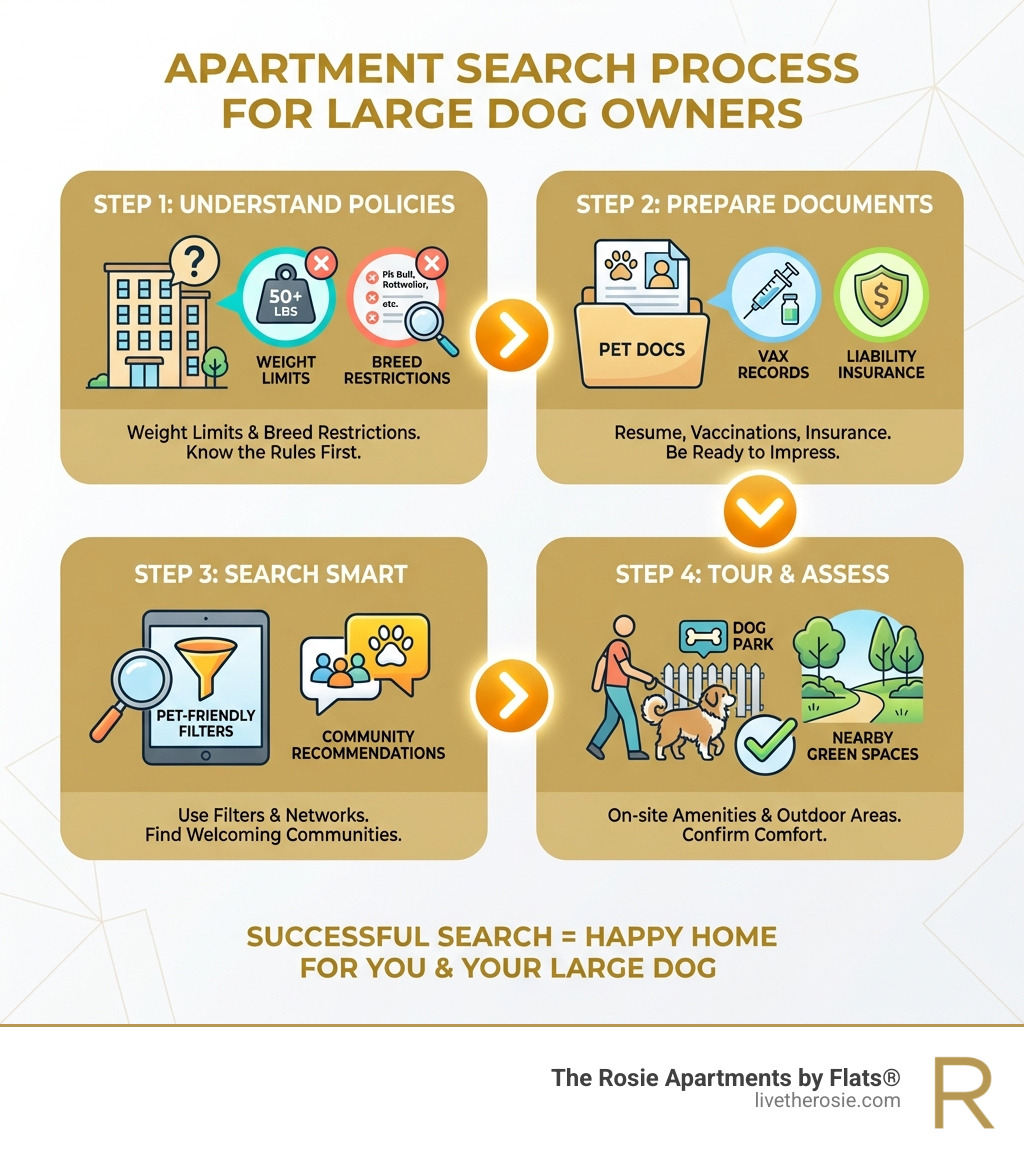
Success in this search comes down to three things: understanding rental policies, preparing documentation that presents a dog as a responsible tenant, and knowing which communities genuinely welcome larger pets. This guide walks through each step of the process, from navigating restrictions to identifying the amenities that make apartment living comfortable for both residents and their dogs.
Understanding Common Pet Policies in Rentals
Navigating the rental market with a pet can sometimes feel like solving a complex puzzle. Property managers and landlords often have specific guidelines in place regarding pets, and understanding these policies is the first step toward a successful apartment search. These policies are designed to support the comfort and well-being of all residents, as well as to protect the property itself. When looking for apartments that allow big dogs, it's crucial to be aware of the common restrictions that might appear.

Common pet policies typically include:
- Weight Limitations: This is one of the most frequently encountered restrictions. Many apartments set a maximum weight for dogs allowed on the property. While the average weight limit often ranges from 25 to 50 pounds, this can vary significantly from one community to another. It's essential to clarify the exact weight limit before investing time in viewing a property.
- Breed Restrictions: Some properties maintain lists of specific dog breeds that are not permitted, often due to perceived aggression or insurance liability concerns. These lists can vary widely, and it is always best to inquire directly about any breed-specific policies.
- Pet Count Limits: Most rental properties have a limit on the number of pets a resident can have. Typically, this is set at a maximum of two pets per apartment. This helps manage the overall pet population within the community and supports a well-kept environment.
- Landlord Concerns: At the heart of these restrictions are concerns about potential property damage, noise disturbances, and the comfort of other residents and pets within the community. Landlords aim to maintain a peaceful and well-maintained setting for everyone.
Understanding these foundational policies helps narrow a search and prepare for discussions with potential landlords and property managers. Being upfront and informed about a pet's characteristics in relation to these policies can save time and prevent disappointment.
Why Do Pet Restrictions Exist?
Pet restrictions, while sometimes frustrating for pet owners, are not arbitrary. They stem from concerns that landlords and property management companies face. These concerns are primarily centered on maintaining the value and condition of the property, as well as supporting a positive living experience for all residents.
One of the primary drivers for pet restrictions is insurance liability. Property insurance policies for apartment complexes often have clauses that restrict certain dog breeds or sizes due to higher perceived risk. If an incident involving a pet occurs, the property owner could face significant financial repercussions. By imposing restrictions, landlords aim to mitigate these risks and ensure their insurance coverage remains valid.
Potential property damage is another significant concern. Pets, especially when left unattended or not properly trained, can cause wear and tear on flooring, walls, and fixtures. From scratched doors to carpet stains, the cost of repairs can be substantial. Landlords often implement pet fees and deposits to help cover these potential damages, but restrictions also serve as a preventative measure.
Noise concerns are also a common reason for pet policies. Excessive barking or other pet-related noises can disrupt the peace and quiet of an apartment community, leading to complaints from neighbors. Property managers work to create a harmonious living environment, and pet restrictions can be a tool to manage noise levels.
Finally, community rules play a role. Many apartment complexes develop a set of guidelines to support the smooth operation of the community and the comfort of all residents. These rules might cover everything from leash policies in common areas to waste disposal requirements. Pet restrictions are an integral part of these broader community rules, designed to promote responsible pet ownership and a pleasant atmosphere. It's common for apartments to have weight limitations, with the average often ranging from 25 to 50 pounds. This standard helps communities manage the size and potential impact of pets on the shared environment.
Strategies for Finding Apartments Allowing Large Dogs
Finding the right apartment that accommodates a dog requires a proactive and strategic approach. With the increasing demand for pet-friendly housing, more resources are available to support the search. By utilizing specific tools and methods, it is possible to significantly improve the chances of securing a suitable home.

Here are some effective strategies to consider:
- Pet-Friendly Search Filters: Begin the search on online rental platforms. Many popular websites now offer filters specifically for "pet-friendly" properties. Some even allow users to specify dog size or indicate "no breed restrictions," which can be helpful. Using these filters is often an efficient way to narrow down options from the start. Websites like Zillow and Apartments.com, which cover the Chicago area, often have these capabilities.
- Online Rental Platforms: Beyond just filters, these platforms are a source of detailed information. Look for pet policies listed in apartment descriptions. If not explicitly stated, make a note to ask about them directly.
- Local Community Boards: Local connections can be valuable. Check physical and online community bulletin boards in Chicago neighborhoods. Sometimes, individual landlords or smaller properties that might not advertise on major platforms will post their openings here and may have flexible pet policies.
- Veterinarian Recommendations: Local veterinarian offices can be an excellent resource. They often know which local apartment complexes or individual landlords are welcoming to pets, as their clients frequently look for similar options. They might also have bulletin boards where such listings are posted.
- Networking with Pet Owners: Connect with other pet owners in Chicago. Online forums, local dog parks, or pet-related social groups can provide insights and recommendations. Word-of-mouth can lead to properties or landlords that are known for accommodating pets.
- Exploring Pet-Friendly Apartment Complexes: Some communities are explicitly designed with pets in mind. These properties often go beyond basic pet acceptance and provide amenities that cater to them. Seeking out these dedicated Pet Friendly Apartment Complexes can simplify the search.
By combining these strategies, renters are better equipped to navigate the Chicago rental market and find a home where both residents and their dogs can thrive.
How to Present Your Pet as an Ideal Tenant
Once potential pet-friendly apartments have been identified, the next step is to make a clear, reassuring case for the dog. Landlords are primarily concerned about potential damage or disturbances, so demonstrating that a pet is well-behaved and that the owner is responsible can ease these worries. This proactive approach can help distinguish an application from others.
Consider preparing the following to showcase a pet as an ideal tenant:
- Pet Resume: A pet resume is a professional-style introduction for a dog. It is a document that highlights the pet's best qualities and demonstrates a commitment to responsible pet ownership. Include a friendly photo, the dog's name, breed, weight, and age. Detail temperament (e.g., "friendly with strangers," "enjoys quiet time"), training (e.g., "house-trained," "knows basic commands"), and daily routine.
- Vaccination Records: Provide up-to-date vaccination records from a veterinarian. This shows that the dog is healthy and protected, which is a common requirement for many properties.
- Training Certificates: If the dog has completed any obedience classes or specialized training, include copies of these certificates. This demonstrates a commitment to responsible pet ownership and reinforces that the dog is well-behaved.
- Spay/Neuter Documentation: Proof that the dog has been spayed or neutered can also be beneficial. This can be a requirement for some pet policies.
- Pet references: Just like professional references, pet references can describe a dog's behavior and the owner's responsibility. Previous landlords, neighbors, or a veterinarian can write a short note about the dog's temperament and daily management. Positive testimonials can go a long way in easing a landlord's concerns.
By presenting a comprehensive and positive profile of a dog, an application addresses common landlord concerns and increases the likelihood of being accepted.
The Role of Pet Liability Insurance
In a competitive market like Chicago, pet liability insurance can be a valuable asset. It serves as a tangible demonstration of responsibility as a pet owner and can reassure property managers about potential risks.
Here's how pet liability insurance works and how it can help secure an apartment:
- What it Covers: Pet liability insurance is designed to protect the pet owner from financial responsibility for damages or injuries a pet might cause. This can include property damage within the apartment unit or common areas, as well as injuries to other people or animals. It typically covers incidents that occur both on and off the rental property.
- How it Works: In the event of a covered incident, a pet liability insurance policy would step in to cover the costs up to the policy's limits. This means that if a dog accidentally damages property or causes an injury, the pet owner is not solely responsible for the financial burden, and neither is the landlord.
- Reassuring Property Managers: Many landlords and property management companies are hesitant about pets due to the potential for unforeseen expenses related to damage or liability. Offering proof of pet liability insurance directly addresses these concerns. It shows that proactive steps have been taken to mitigate these risks, making an application more attractive. It can help bridge the gap for properties that might otherwise be reluctant to accept pets.
- Securing a Lease: In some cases, having pet liability insurance can be the deciding factor in securing a lease. It provides an extra layer of protection for the landlord, potentially making them more flexible with their pet policies. While it is not a guarantee to bypass all restrictions, it strengthens an application and demonstrates a commitment to being a responsible tenant.
When discussing pet policies with potential landlords, mention if pet liability insurance is in place or can be obtained. This proactive step can improve the chances of finding Dog Friendly Rentals Near Me that meet specific needs.
Essential Amenities in a Pet-Friendly Community
Beyond simply allowing pets, pet-friendly apartment communities often offer amenities and features that make life more convenient for both residents and their dogs. These thoughtful additions demonstrate a commitment to creating a welcoming environment for furry residents. When searching for a home in Chicago, keep an eye out for these essential amenities.
Here are some key amenities that improve pet-friendly living:
- On-site Dog Runs or Parks: Dedicated spaces for dogs to exercise and socialize off-leash are a significant benefit, especially in urban environments. These areas provide a convenient place for dogs to burn energy without leaving the property. The Chicago Apartments Complete Dog Runs Guide can offer more insights into properties with these features.
- Pet Washing Stations: After a muddy walk or a trip to the dog park, a designated pet washing station can be very useful. These stations, often equipped with lift tubs, hoses, and dryers, make cleaning a dog easier and help keep apartments clean.
- Waste Stations: Strategically placed waste stations with bags and disposal bins throughout the property encourage responsible pet ownership and help maintain the cleanliness of the community.
- Durable Flooring: Apartments with hard-surface flooring like hardwood, laminate, or tile are often more pet-friendly than those with extensive carpeting. Durable flooring is easier to clean, more resistant to scratches, and helps minimize odors.
- Nearby Green Spaces and Proximity to Parks: While on-site amenities are valuable, access to larger green spaces is also important. Look for apartments located near public parks, walking trails, or dog-friendly areas where residents and their dogs can enjoy longer walks and outdoor activities. Chicago offers many parks and dog-friendly areas that support urban living with a pet.
- Pet-friendly listings often highlight these types of amenities, signaling that the community genuinely welcomes pet owners. These features provide convenience and can foster a sense of community among pet owners.
Choosing a community with these amenities can significantly improve day-to-day life with a dog.
Understanding Rights with Assistance Animals
It is important to distinguish between pets and assistance animals, as their legal protections and the rules governing them in rental housing are different. For individuals with disabilities, assistance animals are not considered pets under federal law, and therefore, typical pet restrictions, fees, and deposits do not apply.
The Fair Housing Act (FHA) protects individuals with disabilities from discrimination in housing. Under the FHA, landlords must make reasonable accommodations for assistance animals, which include both service animals and emotional support animals.
Here is a breakdown of key aspects:
- Reasonable Accommodation: A reasonable accommodation is a change, exception, or adjustment to a rule, policy, practice, or service that may be necessary for a person with a disability to have an equal opportunity to use and enjoy a dwelling. Allowing an assistance animal, even if there is a "no pets" policy, is a common reasonable accommodation.
- Service Animals: These are dogs (and in some cases, miniature horses) specifically trained to perform tasks for the benefit of an individual with a disability. Examples include guiding someone who is blind, alerting someone who is deaf, pulling a wheelchair, or assisting with medical alerts. Their training is directly related to the individual's disability.
- Emotional Support Animals (ESAs): ESAs provide emotional support that alleviates one or more symptoms or effects of a person’s disability. Unlike service animals, ESAs do not require specific task training. Their presence alone can provide the necessary support.
- Documentation Requirements: For an assistance animal, a landlord can request documentation that verifies the individual's disability and the disability-related need for the animal. This documentation typically comes from a medical professional, therapist, or other qualified professional. However, landlords cannot ask about the nature or extent of a person's disability, nor can they demand to see the animal perform its tasks. For service animals, if the disability and the work or tasks the animal performs are not readily apparent, a landlord may ask two questions: (1) Is the animal required because of a disability? and (2) What work or task has the animal been trained to perform? For ESAs, a signed letter from a qualified professional is generally sufficient.
Understanding these rights and providing appropriate documentation when applying for housing helps ensure that requests for reasonable accommodation are handled appropriately.
Frequently Asked Questions about Pet-Friendly Apartments
Finding a pet-friendly apartment can bring up many questions. This section addresses some of the most common inquiries to support a smoother search.
What is a 'pet resume' and what should it include?
A pet resume is a document that highlights a pet's best qualities and the owner's responsibility. It serves as a formal introduction to a potential landlord, helping them see a dog as a well-mannered resident rather than just a potential source of wear and tear.
A comprehensive pet resume should include:
- A friendly photo of the dog.
- Basic information: Name, breed, weight, and age.
- Temperament description: Details about personality, such as being "friendly with children," "calm," or "social with other dogs."
- Training details: Note whether the dog is house-trained, crate-trained, or knows basic obedience commands. Include any training certificates if available.
- Health information: Confirm that vaccinations are current and note if the dog has been spayed or neutered.
- Daily routine: Briefly describe a typical day, including exercise routines and how long the dog is typically alone.
- References: Consider including contact information for previous landlords, a veterinarian, or a dog trainer who can describe the pet's behavior and responsible ownership.
This document can make a positive impression and help an application stand out.
What are the average costs associated with renting with a dog?
Renting with a dog typically involves several additional costs beyond monthly rent. These fees are designed to cover potential wear and tear, administrative efforts, and general upkeep related to having pets on the property.
Common costs include:
- Pet Rent: A recurring monthly fee added to rent.
- One-Time Pet Fees: A non-refundable fee paid at the beginning of a lease.
- Refundable Pet Deposits: An upfront deposit that may be returned at the end of a lease, provided there are no pet-related damages.
Exact dollar amounts vary significantly by property, location, and market conditions in Chicago, so it is important to ask for a clear breakdown of all pet-related costs before committing to a lease.
How can pet liability insurance help secure an apartment?
Pet liability insurance can be a useful tool in an apartment search, especially when aiming to reassure property managers. It demonstrates a commitment to responsible pet ownership and helps address a landlord's primary concerns.
Here's how it works:
- Coverage for Damages and Injuries: Pet liability insurance provides financial protection in case a dog causes property damage or injures another person or animal. This coverage can extend to incidents that occur within an apartment, in common areas, or even off-site.
- Addressing Landlord Risk: Property managers often focus on the financial risks associated with pets. By presenting proof of pet liability insurance, a significant portion of that risk is transferred from the landlord to the insurance provider. This can make an application more appealing, as it offers the landlord an added layer of financial protection.
- Increased Approval Chances: For properties that might be undecided about accepting a pet, or those with stricter policies, offering pet liability insurance can be a deciding factor. It shows a proactive and responsible approach, potentially influencing a decision in favor of approving the application.
Discussing pet liability insurance with potential landlords early in the application process can be helpful.
Conclusion
The journey to finding the right apartment for a resident and a dog requires preparation and a proactive approach. By understanding common policies, preparing comprehensive documentation for a pet, and seeking out communities with helpful amenities, it is possible to find a home that suits both. The Rosie offers a selection of modern, pet-friendly apartments designed for comfortable city living.


