



What Makes a Luxury Modern Rooftop Deck Worth It
A luxury modern rooftop deck transforms unused roof space into one of the most desirable amenities in urban living. Whether you're exploring design ideas for a penthouse terrace or scoping out buildings with premium outdoor spaces, here's what defines a truly high-end rooftop deck:
Quick Overview: Key Elements of a Luxury Modern Rooftop Deck
- Premium materials — Ipe hardwood, Dekton tiles, composite decking, natural stone pavers
- Multi-zone layout — Separate areas for dining, lounging, cooking, and wellness
- Wellness features — Infinity-edge pools, hot tubs, saunas, and outdoor showers
- Smart technology — Integrated lighting, AV systems, automated shading, and climate control
- Greenery and sustainability — Native plants, green walls, solar panels, and sedum borders
- Year-round usability — Louvered pergolas, outdoor heaters, retractable screens
- Stunning views — Glass railings, elevated sightlines, and strategic furniture placement
Rooftop decks have moved well beyond simple patio furniture and a grill. Today's top-tier designs rival five-star resort amenities — right above the city skyline.
In dense urban markets, rooftop decks can increase property values by 5–15% and contribute to significantly faster sales. Buildings with standout rooftop amenities also command 20–30% higher rental premiums when those spaces include sustainable, well-designed features.
This guide breaks down the design trends, materials, structural requirements, and sustainability strategies that define the best luxury rooftop decks being built right now.
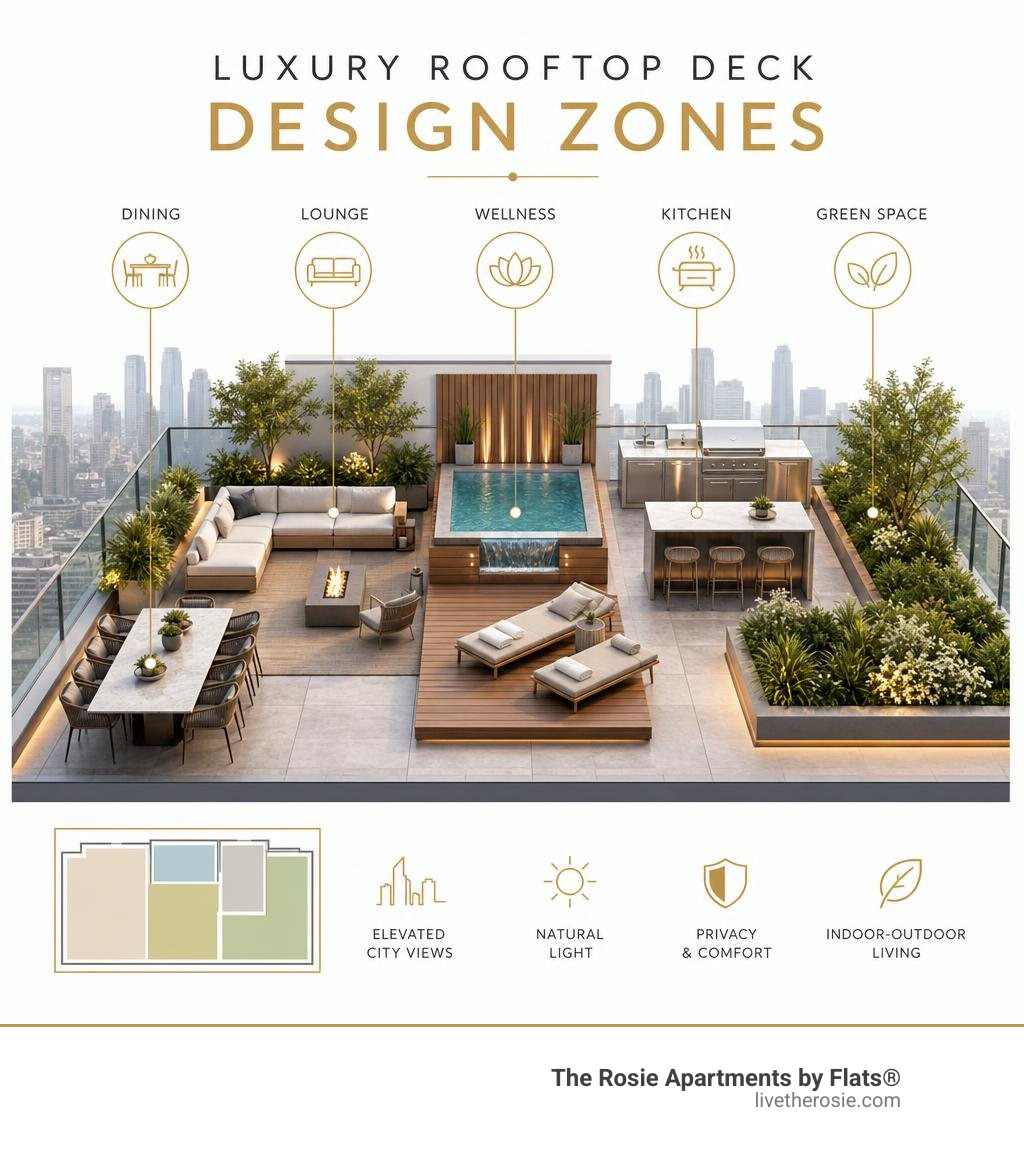
Key Design Trends for a Luxury Modern Rooftop Deck
Modern rooftop architecture focuses on creating seamless transitions between indoor and outdoor spaces. Instead of treating the roof as a separate platform, designers now treat it as an extension of the interior living area. This is achieved through the use of massive sliding glass doors, continuous flooring materials, and matching color palettes.

To make a large rooftop feel inviting, designers use a concept called "zoning." By dividing the space into distinct "rooms" using planters, level changes, and structures, the deck becomes highly functional. A single rooftop can easily host a quiet morning yoga session, a lively afternoon dinner party, and an evening movie screening without any of the activities overlapping.
Key design trends shaping high-end rooftops include:
- Louvered Pergolas: Motorized systems that open and close to control sunlight, block rain, or seal the space for heating.
- Integrated Fire Tables: Linear fire features that provide both physical warmth and a striking visual centerpiece.
- Fully Equipped Outdoor Kitchens: Complete with built-in grills, refrigerators, sinks, and weather-resistant countertops.
- Glass Railings: Frameless glass systems that offer wind protection without blocking panoramic city views.
For those looking at expansive spaces, projects like the Sky-high Wrap-around Dakterras | Garden Vision demonstrate how level differences and custom planters can establish distinct garden rooms on a single level. Incorporating these elements elevates the standard apartment experience, which is why premium residential buildings often feature an Apartment with Rooftop Patio with Pool to deliver a resort-like atmosphere.
Integrating Wellness and Water Features in a Luxury Modern Rooftop Deck
Wellness is a major driver in contemporary rooftop design. High-end decks are no longer just places to sit; they are spaces designed to promote relaxation, health, and mindfulness.
Adding water features is the ultimate way to bring a spa-like feel to the sky. Infinity-edge swim spas and raised pools with transparent acrylic panels create stunning visual volumes. Imagine swimming with the city skyline reflecting off the water’s surface.
Beyond pools, luxury rooftops are incorporating:
- Custom Saunas: Quick-heating traditional, steam, or infrared saunas that offer therapeutic benefits.
- Outdoor Rain Showers: Surrounded by rich hardwood privacy screens for a refreshing rinse under the open sky.
- Sun Decks: Elevated platforms featuring premium loungers and integrated daybeds.
To explore how these aquatic amenities are integrated into modern residential buildings, refer to the Apartment with Rooftop Pool Ultimate Guide for a deep dive into engineering, design, and lifestyle benefits.
Creating Multi-Functional Zones for Entertainment
An exceptional rooftop deck is designed to adapt from day to night. To achieve this versatility, designers focus on high-performance entertainment systems and flexible layouts.
Outdoor cinemas are a popular addition, featuring weather-resistant projectors and screens paired with low-profile, high-fidelity audio systems. For recreation, putting greens shielded from wind offer a fun, interactive element for guests.
Dining zones are often anchored by large custom tables capable of seating ten or more people, directly connected to the outdoor kitchen. These culinary areas utilize durable, scratch-resistant materials such as Neolith and Dekton to ensure the cooking space remains pristine through years of heavy use. For a complete look at how urban buildings maximize these spaces, the Chicago Apartment Rooftop Guide 2026 provides excellent context on modern layouts.
Premium Materials and Finishes for High-End Rooftops
Selecting the right materials is the most critical decision in luxury modern rooftop deck construction. Rooftops are exposed to the harshest environmental elements: intense UV radiation, high winds, heavy rain, and freezing winter temperatures.
| Material Class | Common Examples | Lifespan | Pros | Cons |
|---|---|---|---|---|
| Exotic Hardwoods | Ipe, Machiche, Cumaru, Garapa | 30+ Years | Beautiful natural warmth, extremely durable, resists rot and mold | Requires periodic oiling to maintain color, heavy |
| Sintered Stone/Ceramic | Dekton, Neolith | 30+ Years | Scratch-proof, stain-proof, non-porous, highly modern | Higher initial cost, requires professional installation |
| Composite Decking | High-end capped composites | 15–25 Years | Low maintenance, wide color variety, lightweight | Can warp or fade under extreme UV exposure over time |
| Metals & Synthetics | Aluminum, marine-grade steel | 20+ Years | Lightweight, structural, modern aesthetic | Can get hot in direct sunlight if not coated |
Using premium materials ensures that the deck maintains its structural integrity and visual appeal for decades. For instance, the design featured in the Refined Rooftop Retreat Perches Above Miami Beach - Florida Design showcases how high-performance outdoor furnishings and premium surfaces hold up beautifully against intense sun and wind exposure.
Hardwood vs. Composite in Luxury Modern Rooftop Deck Construction
The debate between natural hardwood and composite materials is central to rooftop engineering. While composites have improved, high-density exotic hardwoods like Ipe and Machiche remain the top choice for luxury designers.

Hardwoods naturally resist splitting, checking, and warping. Over time, if left untreated, woods like Ipe will weather to a beautiful, classic silver-gray without losing any of their structural strength. If the original rich brown tone is preferred, a simple annual application of hardwood oil is all it takes to restore the finish.
Composites are lighter and require less day-to-day maintenance, but they can struggle under the intense, unfiltered UV rays found on rooftops. Under constant sun, cheaper composites can fade, warp, or become uncomfortably hot to the touch.
For projects requiring a mix of strength, beauty, and strict regulatory compliance, architects often turn to custom steel frames paired with hardwood finishes. The Lantern House Roof Deck - Mojo Stumer - Luxury Architects in Long Island and NYC provides a prime example of how high-end wood detailing, such as LED-lit Ipe steps and mahogany trellises, can be engineered to meet strict city fire codes while delivering a warm, sophisticated aesthetic.
Structural, Safety, and Permitting Considerations
Building a rooftop deck is a complex engineering feat. Before any furniture is delivered, several structural and legal requirements must be met to ensure the space is safe and compliant with local building codes.
- Weight Load Capacity: Standard roofs are designed to support minimal loads (usually rain and snow). A luxury rooftop deck requires structural reinforcement to support the weight of decking materials, planters, furniture, and heavy water features. For context, a hot tub filled with water can easily exert a load of 125 pounds per square foot or more.
- Wind Mitigation: Wind speeds are significantly higher on rooftops than at ground level. Pergolas, umbrellas, and privacy screens must be engineered to withstand high wind loads. Glass railings must use heavy-duty tempered glass and robust anchoring systems.
- Waterproofing and Drainage: Impeccable waterproofing is non-negotiable. Rooftop decks are typically built over a pedestal system, which elevates the deck tiles or wood boards above the actual roof surface. This allows rainwater to flow freely underneath to the roof drains.
- Access and Fire Codes: Urban municipalities have strict rules regarding emergency access. For example, some cities require dedicated pathways for emergency personnel, which can limit the usable square footage of the deck.
When evaluating luxury properties, looking into the building's structural design and integrated Amenities ensures that the rooftop facilities are not only beautiful but also fully permitted and engineered to the highest safety standards.
Sustainable and Eco-Friendly Rooftop Innovations
Modern luxury is increasingly defined by sustainability. Incorporating green technology and natural ecosystems into rooftop designs benefits both the environment and the building's energy efficiency.
Green roofs—which use living plants as a roof covering—are growing rapidly. A well-designed green roof or sedum border acts as natural insulation, reducing building cooling costs by up to 75%. Additionally, these green spaces absorb stormwater, reducing the load on city drainage systems during heavy downpours.
To create a sustainable rooftop oasis:
- Native Landscaping: Using native perennials and ornamental trees supports local biodiversity and beneficial wildlife, such as bees and butterflies. Native plants are also highly adapted to the local climate, requiring less water and maintenance.
- Drip Irrigation: Automated, low-volume drip systems deliver water directly to the plant roots, minimizing evaporation and water waste.
- Concealed Solar Panels: Solar technology can be seamlessly integrated behind custom planters or pergolas, generating clean energy to power rooftop lighting, heaters, and sound systems.
A beautiful demonstration of this eco-conscious approach is the Rooftopia -Wrigleyville Secret Garden - Residential Rooftop Deck & Native Garden, which blends structural engineering with lush, native plantings to create a thriving ecosystem high above the city streets.
Frequently Asked Questions about Rooftop Decks
How much value does a rooftop deck add to a property?
In major metropolitan markets, a professionally designed rooftop deck can increase overall property value by 5% to 15%. Because outdoor space is at a premium in urban areas, a rooftop serves as a major selling point, often leading to faster property sales and higher rental premiums of up to 20–30% compared to buildings without functional outdoor amenities.
What are the best low-maintenance materials for rooftops?
For a sleek, modern look that requires almost zero maintenance, Dekton tiles and porcelain pavers are outstanding. They are scratch-resistant, stain-proof, and will not fade under intense sunlight. For decking, high-performance capped composites and naturally durable hardwoods like Ipe (which can be left to weather naturally) are the best choices. Aluminum is the preferred material for lightweight, rust-free planters and pergolas.
Can you install a hot tub on a standard rooftop deck?
No, a hot tub cannot be installed on a standard roof without structural modification. Because water is incredibly heavy (8.34 pounds per gallon), a fully loaded hot tub with guests can easily exceed structural weight limits. A structural engineer must assess the building's load-bearing capacity and design reinforcing steel supports before installation.
Conclusion
A luxury modern rooftop deck represents the pinnacle of urban living. By combining premium materials like Ipe wood and Dekton with wellness amenities, smart technology, and sustainable design, these sky-high retreats offer a perfect escape from the hustle and bustle of city life.
For those seeking the ultimate in modern, elevated living, finding a residence that offers these high-end features is key. Experience the perfect blend of luxury, convenience, and stunning outdoor amenities at Pet-Friendly Apartments Chicago, where premium rooftop living meets the vibrant culture of the city.


