



Why Outdoor Pools Are the Ultimate Summer Essential
An outdoor pool is more than just a place to cool off—it's a lifestyle upgrade that transforms any space into a personal or shared retreat. For those considering a backyard oasis or apartment living with pool access, understanding the available options is essential.
Key information about outdoor pools includes:
- In-Ground Pools - Permanent structures built into the landscape (concrete, vinyl-liner, or fiberglass)
- Above-Ground Pools - Often easier to install, but less permanent
- Specialty Pools - Lap pools, infinity pools, and swim spas designed for specific uses
- Shared Pool Amenities - Access to professionally maintained facilities without ownership responsibilities
- Key Considerations - Costs typically range from $5,000 to $100,000+, plus permits and ongoing maintenance
The beauty of outdoor pools is their versatility. Private pools offer complete customization and control, while shared pools in apartment communities provide convenience without the maintenance burden. Each option comes with distinct advantages depending on lifestyle and living situation.
For city dwellers, shared outdoor pools can offer all the benefits of pool life without the commitment of ownership. Meanwhile, those with their own outdoor space face exciting decisions about pool type, features, and design that can genuinely improve property value and quality of life.
This guide covers everything from choosing the right pool type to understanding safety requirements and seasonal operations for private installations or shared amenities.
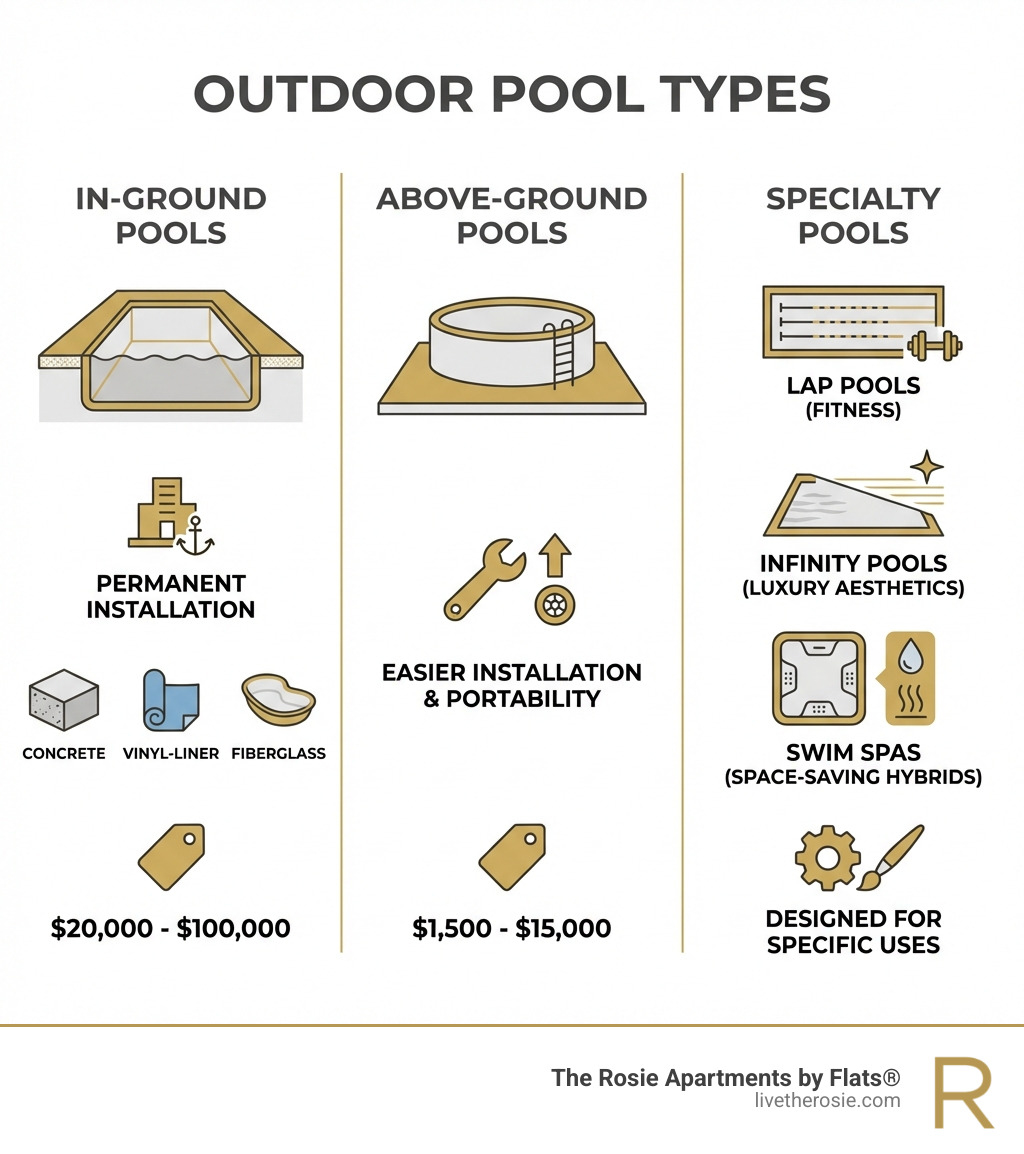
A Deep Dive into Outdoor Pool Types
When envisioning an outdoor pool, a variety of images might come to mind, from an elaborate in-ground oasis to a more accessible above-ground option. Understanding the different types available is the first step in deciding which is suitable for a private residence or a community setting.

In-Ground Pools
These are permanent structures built directly into the landscape, offering the highest level of customization and aesthetic integration. In-ground pools are typically the most costly to build, but they also tend to add significant value and appeal to a property. There are three main types:
- Concrete Pools: These are the most customizable in terms of shape, size, and depth. Built by spraying concrete (gunite or shotcrete) onto a rebar framework, they are incredibly durable and can be finished with plaster, tile, or aggregate. However, they have the longest installation time and often the highest upfront cost.
- Vinyl-Liner Pools: Featuring a flexible vinyl sheet that fits into an excavated hole, these pools offer a smoother surface than concrete and can be installed more quickly. While generally less expensive than concrete, the vinyl liner typically needs replacing every five years or so, adding to long-term maintenance.
- Fiberglass Pools: These come as pre-formed shells that are lowered into an excavated hole. Installation is significantly faster than concrete or vinyl-liner pools. Fiberglass is known for its smooth, non-porous surface, which resists algae growth and requires less maintenance. Their flexibility can also be an advantage in certain soil conditions. However, design options are limited to available molds.
Above-Ground Pools
Above-ground pools are generally easier to build than their in-ground counterparts. They are a popular choice for those seeking a more temporary swimming solution.
- Standard Above-Ground Pools: These typically feature a metal or resin frame with a vinyl liner. They can be installed relatively quickly and, in some cases, can be disassembled and moved. While they offer fewer aesthetic options than in-ground pools, they provide a great way to enjoy swimming in a private backyard.
- Inflatable Pools: At the most basic end of the spectrum, inflatable pools are highly temporary and portable. They are perfect for small children or for occasional, casual use, requiring minimal setup and offering the lowest cost of entry.
Specialty Pools
Beyond the traditional categories, several specialized types of outdoor pool cater to unique needs and preferences:
- Lap Pools: Designed for fitness, these pools are long, narrow, and typically rectangular. They require minimal space, with some being as little as 8 feet wide for a single swimmer, making them ideal for smaller yards where exercise is the primary goal.
- Infinity Pools: Also known as "zero-edge" or "vanishing-edge" pools, these create the illusion of water extending to the horizon. They are a luxury feature, often found in properties with scenic views, requiring complex engineering and a higher budget.
- Swim Spas: A hybrid of a pool and a spa, swim spas are compact units that use powerful jets to create a current for resistance swimming. They offer the benefits of a full-sized pool for exercise in a much smaller footprint, with some spanning as little as 12 feet. Many also include hydrotherapy jets for relaxation.
| Feature | In-Ground Pools | Above-Ground Pools |
|---|---|---|
| Installation | Complex, requires excavation, professional build | Simpler, quicker, often DIY-friendly |
| Permanence | Permanent structure, integrated into landscape | Less permanent, can be moved or dismantled |
| Cost | $20,000 - $100,000+ | $1,500 - $15,000 |
| Aesthetics | Highly customizable, luxury appeal | More basic, less integrated design |
| Maintenance | Higher long-term maintenance, potential liner replacement (vinyl) | Liner replacement (vinyl), less complex repairs |
Advantages and Disadvantages of In-Ground Pools
Choosing an in-ground outdoor pool is a significant investment that brings a host of benefits, alongside some considerations.
Advantages:
- Permanence and Property Value: An in-ground pool is a permanent addition that can significantly improve a property's aesthetic appeal and market value. It becomes an integral part of the home's landscape.
- Customization: There are almost limitless options for shape, size, depth, and features, allowing for a pool design that perfectly matches a specific vision and backyard layout.
- Seamless Integration: These pools can be beautifully integrated with surrounding landscaping, patios, and outdoor living spaces, creating a cohesive and luxurious environment.
- Durability: Especially with concrete construction, in-ground pools are built to last for decades with proper care.
Disadvantages:
- Cost: The initial investment for an in-ground pool is considerable due to extensive excavation, materials, and professional labor.
- Longer Installation Time: The construction process can take weeks or even months, depending on the complexity of the design and local regulations.
- Extensive Permits: A more complex permitting process is required, adhering to strict local building codes and zoning laws.
- Maintenance Demands: While professionally built, in-ground pools require consistent cleaning, chemical balancing, and occasional repairs or renovations, such as vinyl liner replacement every five years or resurfacing for concrete.
For a deeper dive into the various types of pools and their characteristics, resources like this guide on pool types can be consulted.
Advantages and Disadvantages of Above-Ground Pools
Above-ground pools offer a more accessible entry point into pool ownership, with their own set of pros and cons.
Advantages:
- Easier and Quicker Installation: An above-ground pool can often be installed with minimal professional help, significantly reducing installation time and costs.
- Cost: These pools are an option for those who want to enjoy swimming without a large financial commitment.
- Portability: Some types of above-ground pools can be disassembled and moved, offering flexibility for relocation or reconfiguring a backyard.
- Less Permanent Aesthetic: While some view this as a disadvantage, the less permanent nature can be an advantage for those who prefer not to make a lasting change to their landscape.
Disadvantages:
- Less Aesthetic Appeal: Generally, above-ground pools do not offer the same level of visual integration or luxury aesthetic as in-ground pools.
- Shorter Lifespan: While durable, above-ground pools typically have a shorter lifespan than well-maintained in-ground pools.
- Limited Depth and Features: Options for depth, shape, and integrated features like diving boards or elaborate water features are much more restricted.
- Less Integrated Landscape: They often sit on top of the ground, making seamless landscaping integration more challenging.
Planning and Building a Private Outdoor Pool
Starting on the journey to build a private outdoor pool is an exciting endeavor that requires careful planning. From the initial spark of an idea to the first splash, every step is crucial in creating an ideal backyard oasis.

Initial Considerations
Before breaking ground, several factors need attention:
- Budgeting: This is paramount. The cost to build a pool can vary greatly, generally ranging from $5,000 for a basic above-ground model to $100,000 or more for a custom in-ground design. This includes not just the pool itself, but also excavation, decking, landscaping, fencing, and potential features. It is important to factor in not just installation costs, but also ongoing maintenance.
- Site Suitability: A backyard's landscape plays a huge role. It is necessary to assess soil conditions, the presence of underground utility lines, drainage patterns, and accessibility for construction equipment. A sloped yard, for instance, might require additional excavation or retaining walls, increasing costs.
- Landscape Integration: Consider how the pool will fit into an existing or planned outdoor space, including sun exposure, privacy from neighbors, and how the pool will connect with other elements like patios, gardens, or outdoor kitchens.
- Usage and Lifestyle: The intended use of the pool—for relaxation, family fun, fitness, or entertaining—will influence the type, size, depth, and features chosen.
Navigating Regulations and Permits
Building an outdoor pool in a city like Chicago requires strict adherence to local regulations and the acquisition of necessary permits. This ensures the pool is safe, structurally sound, and compliant with community standards.
- Local Ordinances: It is necessary to research local zoning laws, which dictate where on a property a pool can be located (e.g., setbacks from property lines), and any specific fencing requirements for safety.
- Building Permits: A residential building permit is almost always required. This permit covers the structural integrity of the pool, as well as electrical and plumbing installations. Requirements can vary, so checking with the local government before starting any project is essential.
- Hiring Professionals:To steer this complex process, it is highly recommended to engage licensed professionals. This includes:
- Registered Architect (RA) or Professional Engineer (PE): For design, structural plans, and ensuring compliance with building codes.
- Licensed Contractor: For the actual construction work, ensuring proper installation and adherence to plans. They often handle the permit application process on behalf of the property owner.
While specific project checklists vary by location, the principles of engaging licensed professionals and securing permits are universal. Following these steps helps avoid costly delays, fines, and potential safety hazards.
Key Considerations for a Private Outdoor Pool
Once the groundwork for planning and permits is laid, it's time to dig into the details that make an outdoor pool unique.
- Pool Depth: The depth of a pool should align with its intended use. For casual swimming and lounging, a depth varying between 0.6 to 1.4 meters (approximately 2 to 4.5 feet) in the shallow end is common. If diving is planned, a designated diving well that is 2.9 meters (approximately 9.5 feet) deep is typically required for safety. Overall, pool depths often range from 3 feet to 9 feet.
- Water Temperature:The ideal swimming temperature for many is around 84°F (29°C). This can be achieved and maintained with various systems:
- Heaters: Gas or electric heaters can warm the water quickly, extending the swimming season into cooler months.
- Solar Covers: These covers float on the water's surface, trapping heat from the sun and reducing heat loss, making them an eco-friendly option to maintain warmth.
- Decking Materials:The material surrounding a pool is critical for both aesthetics and safety. Options include:
- Concrete: Durable and versatile, can be stamped or colored.
- Pavers: Offer a wide range of styles and colors, easy to repair.
- Wood/Composite: Provide a natural look, but require more maintenance (wood) or are higher cost (composite).
- Specialized Materials: Some materials, like Accoya decking, are celebrated for their dimensional stability, resistance to rot, and low thermal gain, making them ideal for challenging outdoor environments where they can withstand extreme weather conditions and maintain comfort underfoot. Such materials can naturally transform into a silver patina over time, adding to their unique aesthetic.
Maximizing an Oasis: Features, Safety, and Maintenance
An outdoor pool is a canvas for enjoyment, and adding the right features, ensuring safety, and committing to proper maintenance transforms it into a truly maximized oasis.
Water Features, Comfort Amenities, and Recreational Add-ons
To improve the pool experience, a variety of elements can be considered:
- Water Features:These add visual appeal and a playful element.
- Waterslides: A favorite for families, waterslides bring an element of thrill. It is important to always check for specific age and height guidelines, and ensure proper usage (e.g., head-first or stomach slides are typically not permitted) to maintain safety.
- Spray Features and Fountains: These add movement and sound, creating a relaxing ambiance or a fun play area, especially popular in wade pools.
- Comfort Amenities:These extend the usability and enjoyment of a pool.
- Heaters: As mentioned, a pool heater can significantly extend the swimming season, allowing for enjoyment of the pool even when the Chicago weather turns cooler.
- Lighting: Underwater and perimeter lighting not only improves safety for evening swims but also creates a stunning ambiance, changing the pool into a glowing centerpiece.
- Pool Covers: Beyond solar covers, safety covers are crucial for preventing accidents and keeping debris out, while automatic covers offer ultimate convenience.
- Recreational Add-ons:
- Diving Boards: If a pool has the necessary depth (a minimum of 2.9 meters for a diving well), a diving board can add another dimension of fun.
- Water Games: Volleyball nets, basketball hoops, and floating lounges further improve the recreational opportunities.
For those living in apartment communities, a rooftop patio with a pool often combines these desirable features with breathtaking city views, offering a premium amenity without the responsibilities of private ownership.
Essential Safety and Seasonal Care
Safety and proper maintenance are non-negotiable aspects of outdoor pool ownership, ensuring years of worry-free enjoyment.
- Safety Regulations:
- Fencing: Local regulations, particularly in urban areas like Chicago, typically require a fence around any pool to prevent unsupervised access, especially by children.
- Pool Alarms: Gate alarms on entry points and surface alarms that detect water disturbance provide an additional layer of security.
- Non-Slip Surfaces: The decking around the pool should be made of non-slip materials to prevent falls.
- Supervision Rules: Direct supervision is paramount, especially for children. Many facilities define direct supervision as being "within arms reach, in the water and in swim attire." Age guidelines often dictate adult-to-child ratios, for example, one adult for two young children, or one adult for four children wearing lifejackets. Children who pass a swim test might have different supervision requirements, but an adult presence in the pool area remains essential.
- Seasonal Operations: The Chicago climate means seasonal operations are critical for outdoor pools.
- Pool Opening Procedures: Typically in late spring, this involves removing the winter cover, cleaning the pool thoroughly, re-installing equipment, filling the pool, and balancing the water chemistry.
- Winterizing/Closing Procedures: Before winter, the pool must be drained to below the skimmer level, water blown out from pipes to prevent freezing, winterizing chemicals added, and the pool securely covered.
- Routine Maintenance:
- Water Chemistry: Regular testing and balancing of chemicals like chlorine, pH, and alkalinity are essential for water safety and clarity.
- Cleaning: Daily skimming, regular vacuuming, and filter cleaning keep the pool free of debris and functioning efficiently.
Enjoying Shared Outdoor Pools
For many, especially those in apartment living, the dream of an outdoor pool doesn't necessarily mean private ownership. Shared outdoor pools in communities like The Rosie offer an incredible alternative, providing all the benefits without the demanding upkeep.
Benefits of Shared Pools
- Access to Amenities: Shared pools often come with a suite of additional amenities, such as lounge chairs, cabanas, grilling areas, and even adjacent fitness centers, creating a comprehensive recreational space.
- Recreational Opportunities: These pools are designed for diverse activities, from lap swimming to family play. They foster a sense of community, providing a vibrant hub for residents to socialize and relax.
- No Maintenance Burden: One of the most significant advantages is freedom from maintenance. Cleaning, chemical balancing, repairs, and seasonal opening/closing are all handled by professional staff.
- Convenience: Residents can enjoy a luxurious amenity without the substantial upfront costs, ongoing utility bills, or unexpected repair expenses associated with private pool ownership.
In Chicago, having access to an outdoor pool within an apartment community, such as those available at The Rosie, means residents can make the most of the warmer months right at their doorstep.
What to Expect at a Shared Outdoor Pool
Shared outdoor pool facilities are typically well-equipped to cater to a range of users and activities.
- Common Facilities:A variety of features can be expected, including:
- Lap Lanes: Often 25 meters long, dedicated lanes for those seeking an exercise-focused swim.
- Wade Pools: Shallow areas designed for young children, sometimes with gentle spray features.
- Splash Pads: Interactive water play areas for all ages.
- Lounge Areas: Ample seating and shaded spots for relaxation.
- Schedules: Shared outdoor pools operate seasonally, typically opening in late spring and closing in early fall, with specific hours for different activities (e.g., adult swim lengths, open swim, family swim).
- Admission Details: For public outdoor pools, admission fees vary, and options often include day passes or seasonal passes. Some apartment communities include pool access as part of their amenities, while others might offer guest passes. Options for day passes to outdoor pools in Chicago can often be found at various hotels and resorts, even for non-guests.
Common Rules and Regulations
To ensure a safe and enjoyable experience for all, shared outdoor pools have established rules and regulations.
- General Rules:
- Swim Attire: Most pools require appropriate swim material, such as lycra or spandex. Cotton, denim, and other non-swim materials are typically not permitted in the water. For young children who are not toilet trained, plastic pants or swim diapers are usually mandatory.
- Showering: A quick rinse before entering the pool is often required to help maintain water quality.
- No Running: To prevent slips and falls, running on the pool deck is strictly prohibited.
- No Glass: Glass containers are usually banned from the pool area to prevent breakage and potential injuries.
- Supervision Requirements: Strict supervision policies are in place for children. For example, children aged 6 and under might require direct in-water supervision by an adult (16+ years old) at specific ratios (e.g., one adult per two children, or one adult per four children if wearing lifejackets). Older children (7-13) who are non-swimmers may have similar requirements, while those who pass a swim test might be allowed to enter unaccompanied but still require adult supervision within the pool area.
- Facility-Specific Rules:
- Slide Guidelines: Waterslides often have specific height and age requirements (e.g., minimum 48 inches tall, minimum 7 years old) and rules against head-first or stomach slides.
- Diving Rules: Diving is usually only permitted in designated deep ends or diving wells.
- Prohibited Items: Inflatables (other than approved personal flotation devices) are often not allowed to ensure clear sightlines for lifeguards and prevent overcrowding.
These rules are designed to create a secure and pleasant environment for everyone enjoying the outdoor rooftop pools and other aquatic facilities in the community.
Conclusion
From the intricate planning of a private backyard oasis to the convenient luxury of shared amenities, outdoor pools offer a refreshing escape and a vibrant focal point. This article has explored the diverse types, from customizable in-ground options to various above-ground models and specialized fitness pools, each with its unique advantages and considerations.
The essential aspects of planning and building have also been covered, emphasizing the critical role of local regulations, permits, and professional guidance in ensuring a safe and compliant installation. The importance of safety features like proper supervision, fencing, and non-slip surfaces, alongside the seasonal care required for the Chicago climate, cannot be overstated.
For those seeking to embrace the pool life without the commitment of ownership, shared outdoor pools within apartment communities present an ideal solution. These facilities offer professionally maintained amenities, diverse recreational opportunities, and a built-in sense of community, allowing for relaxation and enjoyment.
Whether dreaming of a private retreat or cherishing the convenience of shared amenities, understanding these key aspects empowers informed decisions. For those seeking luxurious living in Chicago with exceptional amenities, including access to a stunning outdoor pool, exploring Chicago rentals with a pool is a potential next step. Communities like The Rosie Apartments combine urban convenience with premium amenities. Explore community amenities to find a suitable home.


