



Why Finding the Right Pet Friendly Apartment Matters
Pet friendly apartments are rental properties that welcome pets and provide amenities designed for both you and your four-legged companion. With over 20,000 options in Los Angeles alone and thousands more across Chicago and Orlando, finding the right fit requires understanding what truly makes an apartment pet-friendly.
Quick Guide to Pet Friendly Apartments:
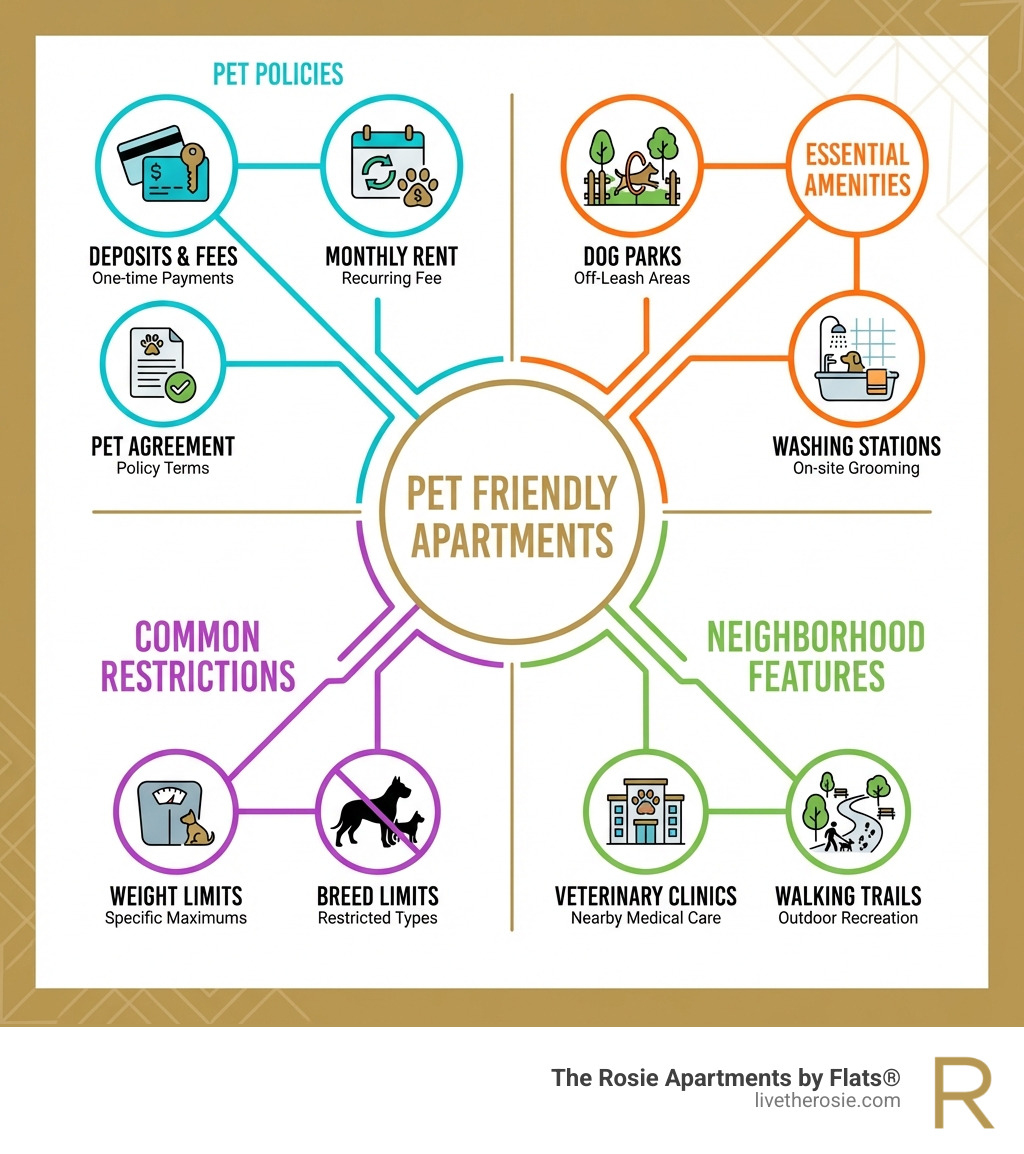
- What to expect: Properties that allow pets to live inside your unit, often with dedicated amenities like dog parks, pet washing stations, and waste disposal areas
- Typical costs: Pet rent (monthly fee), pet deposits (one-time payment), and sometimes non-refundable pet fees
- Common restrictions: Weight limits, breed restrictions, and maximum of two pets per unit
- Key features: On-site dog runs, pet spas, fenced yards, and pet-friendly flooring
- Where to find them: Major cities like Los Angeles (20,367 listings), Chicago (16,839 listings), and Orlando (12,886 listings)
Finding a place where your pet is genuinely welcome—not just tolerated—makes all the difference. Pet friendly living means more than checking a box on an application. It's about communities designed with features like walking trails, nearby veterinary services, and neighbors who understand that pets are family.
Whether you're searching for a studio in downtown Chicago or a two-bedroom near Orlando's parks, understanding pet policies, fees, and neighborhood characteristics helps you make the right choice. Most pet friendly communities offer specialized amenities, but policies vary widely on everything from breed restrictions to monthly costs.
What Defines Truly Pet Friendly Apartments
A property that merely "allows" pets is quite different from one that is truly pet-friendly. In a standard rental, a pet might be permitted, but the environment may not be conducive to their well-being. Truly pet friendly apartments integrate features that cater to the daily needs of animals and their owners.
One of the most sought-after features in modern pet friendly apartment complexes is the on-site pet washing station or pet spa. These areas allow residents to clean their pets after a walk without cluttering their own bathrooms. This is especially useful in cities like Chicago, where salt and slush in the winter can make paws messy.
Other essential features include:
- Dedicated Dog Runs and Fenced Areas: On-site spaces where dogs can stretch their legs safely within the community gates.
- Pet-Friendly Flooring: Many modern luxury units utilize luxury vinyl plank (LVP) or tile, which are more resistant to scratches and easier to clean than traditional hardwood or carpet.
- Waste Stations: Strategically placed stations with bags and disposal bins make it easy for residents to keep the community clean.
- Outdoor Connectivity: Proximity to parks and walking trails is a major factor. Understanding commute time data and transit information is also helpful for pet owners who may need to get home quickly for mid-day walks.
Navigating Pet Policies and Rental Costs
Understanding the financial obligations associated with pet friendly apartments is crucial during the search process. Landlords and management companies typically use a combination of three types of charges to cover the potential wear and tear caused by animals.
- Pet Rent: This is a monthly fee added to the base rent. It is intended to cover the ongoing use of pet-related amenities and general maintenance of the grounds.
- Pet Deposits: This is a one-time payment made at the start of the lease. In some cases, this deposit is refundable if no damage is found upon move-out.
- Non-refundable Pet Fees: Unlike a deposit, this fee is not returned. It is often used for administrative costs or professional cleaning of the unit after a pet has lived there.
All rental policies must adhere to Equal Housing Opportunity information guidelines, ensuring that housing is accessible and fair.
Common Restrictions in Pet Friendly Apartments
Even in buildings marketed as pet-friendly, there are usually specific rules in place to ensure the comfort of all residents. It is standard for communities to limit the number of pets to a maximum of two per household.
Weight limits are another common restriction. Some buildings may only allow "small" pets (typically under 25-35 pounds), while others are more accommodating to larger breeds. Breed restrictions are also frequent; many management companies maintain a list of breeds that are not permitted due to insurance requirements.
Documentation is a vital part of the process. Renters should be prepared to provide:
- Up-to-date vaccination records.
- Proof of spaying or neutering.
- A photo of the pet for identification purposes.
- References from previous landlords regarding the pet’s behavior.
For a deeper dive into these requirements, consult an Ultimate Pet Friendly Apartment Guide to ensure all bases are covered before applying.
Exploring Pet Friendly Living at The Rosie Apartments
Located in the vibrant Pilsen neighborhood of Chicago, The Rosie offers a premier example of luxury pet friendly apartments. The design philosophy combines urban convenience with high-end finishes that accommodate a modern lifestyle for both humans and their pets.
The units at The Rosie feature premium finishes that are as durable as they are beautiful. With a rooftop deck and an outdoor pool, the community provides ample space for relaxation. The Pilsen neighborhood itself is a significant draw, known for its walkable streets and local character. When looking for a home, identifying neighborhood indicators such as wide sidewalks and nearby green spaces is essential for pet owners.
Pet Friendly Living in Top Cities
The availability of pet friendly apartments varies significantly by geography. In Chicago, there are approximately 16,839 pet-friendly rentals available, representing a substantial portion of the market. The city is known for its high WalkScore and transit accessibility, making it easier for pet owners to navigate daily life.
In other major markets:
- Los Angeles: With over 20,000 pet-friendly listings, the city offers a vast array of choices from studios to three-bedroom units.
- Orlando: There are approximately 12,886 pet-friendly options, with many communities emphasizing outdoor amenities and proximity to parks.
Regardless of the city, the average rental prices for pet-friendly units often reflect the inclusion of high-end amenities like fitness centers and controlled access.
Preparing Your Rental Application
Securing a spot in a competitive building requires preparation. Beyond the standard credit checks and income verification, pet owners should treat their pet's "application" with the same level of detail.
Creating a "pet resume" can help set an application apart. This document should highlight the pet's temperament, training certifications (such as Canine Good Citizen), and a history of successful apartment living. Additionally, obtaining a reference letter from a previous landlord can provide peace of mind to a new property manager.
Most modern leases also require renter's insurance that specifically includes pet liability coverage. This protects the tenant in the event of accidental damage or incidents involving the pet. For those specifically looking for Apartments for Rent That Take Dogs, having these documents ready can significantly speed up the approval process.
Frequently Asked Questions about Pet Friendly Rentals
What is the difference between a pet fee and pet rent?
A pet fee is a one-time, typically non-refundable payment made at the beginning of the lease. It is often viewed as the "cost of admission" for having a pet in the building. Pet rent, conversely, is a recurring monthly charge. While a pet fee covers administrative setup, pet rent is designed to cover the ongoing impact of the pet on the community's common areas and amenities.
How can a pet-friendly neighborhood be identified?
A neighborhood's pet-friendliness can be determined by observing the local infrastructure and businesses. Look for:
- Pet Boutiques and Groomers: A high concentration of these businesses indicates a large local pet population.
- Veterinary Clinics: Having a clinic within a short distance is a major convenience for routine care and emergencies.
- Sidewalk Quality: Wide, well-maintained sidewalks and ample waste stations suggest the area is frequently used by pet owners.
- Resident Activity: Seeing other residents walking their dogs is the clearest sign that the area is welcoming to animals.
What legal rights do tenants with pets have?
Under the Fair Housing Act, housing providers are required to make reasonable accommodations for assistance animals, which include service animals and emotional support animals. These animals are not considered "pets" under the law, and therefore, standard pet fees and breed restrictions typically do not apply to them. However, for standard pets, the terms of the lease agreement and local municipal regulations will govern the relationship between the tenant and the landlord. It is always advisable to review the specific pet addendum in a lease before signing.
Conclusion
Finding the perfect home for a household that includes animals requires careful research and a clear understanding of property policies. From the luxury finishes at The Rosie Apartments to the bustling streets of Chicago’s Pilsen neighborhood, the right environment provides a foundation for a high quality of life.
By focusing on communities that offer dedicated amenities like rooftop decks, outdoor pools, and pet-specific facilities, residents can enjoy the best of urban living without compromise. To see how these features come together in a modern setting, Explore Luxury Amenities and discover a community designed with every member of the family in mind.


