



Why Finding the Right Home for You and Your Pet Matters
Pets in apartments are more than just roommates—they're family. Whether you're already a pet parent or planning to become one, finding housing that welcomes your furry (or scaly, or feathered) companion is a top priority.
Quick Answer: Best Apartment Pets
- Cats: Independent, use vertical space efficiently, ideal for indoor living
- Small Dogs: Low-energy breeds that adapt well to smaller spaces
- Fish: Quiet, low-maintenance, proven stress-reduction benefits
- Small Caged Animals: Hamsters, guinea pigs, gerbils (contained, manageable)
- Birds & Reptiles: Possible, but require specific care and consideration
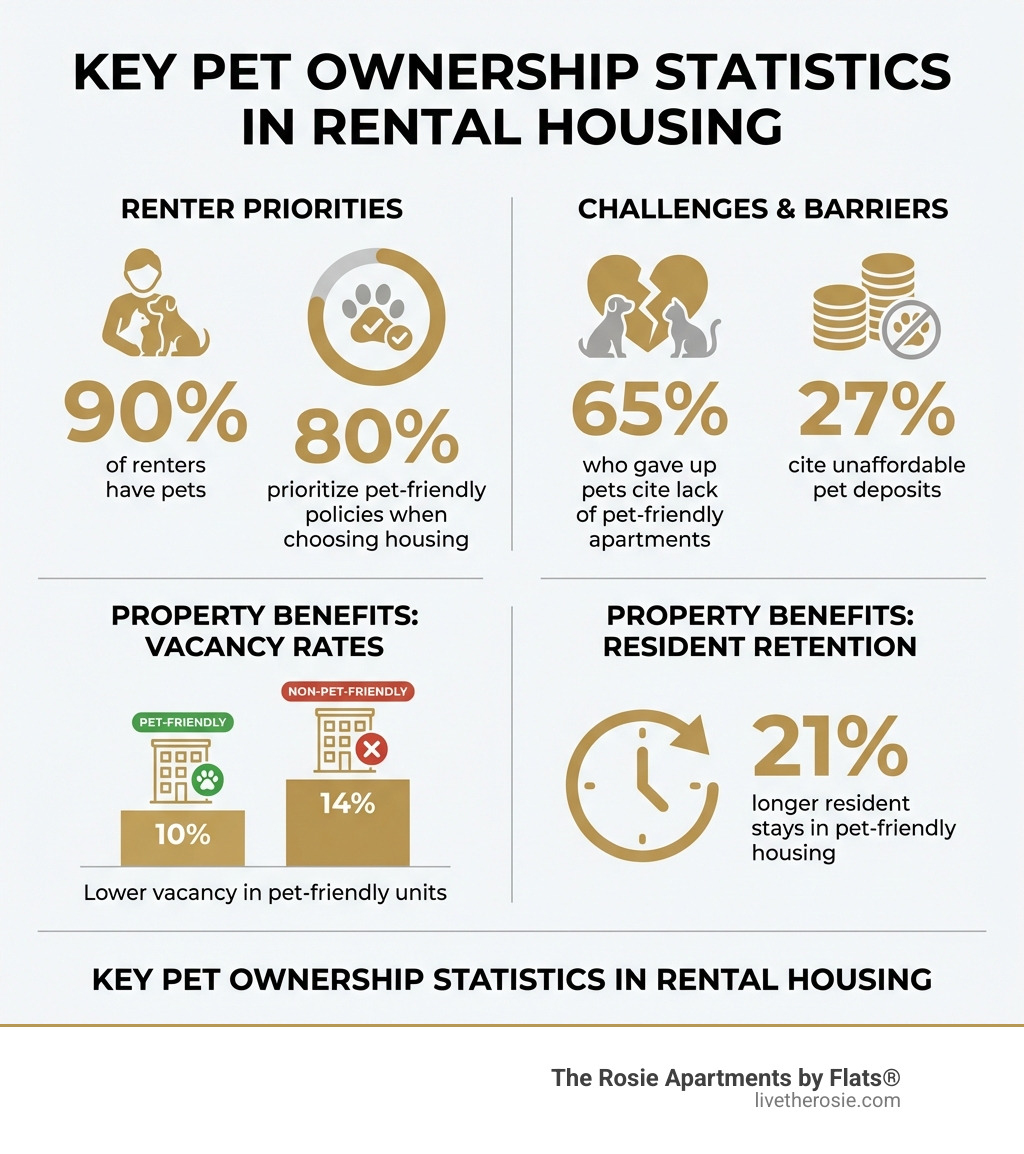
The numbers tell a compelling story. Nearly 90% of renters have a pet, and over half of those without one plan to adopt within the year. For these renters, 80% say a pet-friendly policy plays a major role in where they choose to live.
Yet the reality is challenging. 65% of renters forced to give up their pets cite the inability to find pet-friendly housing as the main reason.
This guide covers which pets thrive in apartment settings, how to be a considerate neighbor, and what your rights and responsibilities are as a renter with pets. Whether you're considering a hamster or a hound, making an informed choice benefits everyone—you, your pet, your neighbors, and your landlord.
The Win-Win Scenario: Benefits of Pet-Friendly Communities
Creating a pet-friendly environment offers significant advantages for both residents and property managers, fostering a more vibrant and cohesive community.

For Tenants: Companionship and Community
For many, a pet is an integral part of the family, and the thought of rehoming a beloved companion due to housing restrictions is heartbreaking. Pet-friendly policies eliminate this painful dilemma, allowing residents to maintain the emotional well-being and companionship their pets provide. The presence of pets can also be a catalyst for community building. Dog owners often connect during walks or at designated pet relief areas, fostering a sense of camaraderie and shared experience within the building. This leads to a more engaged and happier tenant base.
For Property Managers: Stability and Increased Demand
From a property management perspective, embracing pets in apartments brings tangible benefits. Allowing pets significantly expands the pool of prospective tenants. With demand for pet-friendly housing on the rise—as evidenced by 80% of renters prioritizing such policies—properties that welcome pets can fill vacancies faster. Statistics show that apartments allowing pets experience a 10% vacancy rate on average, compared to 14% for those that do not. This means quicker lease-ups and reduced downtime between tenants.
Furthermore, residents in pet-friendly housing tend to stay longer, with studies indicating a 21% longer tenancy. This reduces turnover costs associated with cleaning, repairs, and marketing. While concerns about potential damage exist, the opportunity to attract a wider, more consistent resident base often outweighs these risks. Property managers can also implement pet fees or pet rent to help mitigate any potential wear and tear.
Choosing Your Companion: The Best Pets for Apartment Living
Selecting the right pet for apartment living involves careful consideration of several factors: your living space, the pet's activity level, potential noise, and your budget for their care. The goal is to ensure a happy, healthy life for your animal while respecting your neighbors and community.
Cats: Masters of Vertical Space
Cats are often considered ideal apartment dwellers due to their independent nature and ability to thrive indoors. Unlike dogs, they don't require daily walks outside, making them a low-maintenance option for busy urban residents. Cats are also masters of utilizing vertical space, changing shelves, cat trees, and perches into their own multi-level playgrounds. Providing ample vertical opportunities can make even a smaller apartment feel exponentially larger for them.
To keep a cat happy and healthy, ensure they have scratching posts to protect your furniture, plenty of toys for mental stimulation, and dedicated time for play and exercise. With 94.2 million pet cats residing in the US, they clearly have a special place in many homes.

Finding the Right Dog for Pets in Apartments
While dogs require more direct engagement than cats, many breeds are perfectly suited for apartment life. The key is to choose a dog whose energy levels and size align with your living situation. Small to medium-sized, low-energy breeds often adapt well.
Daily walks are essential for all dogs, regardless of size, to provide physical activity, mental stimulation, and opportunities for bathroom breaks. Crate training can also be a valuable tool, offering your dog a secure den-like space and aiding in potty training and anxiety management. Researching breed-specific needs and temperaments is crucial.
For those looking for a perfect canine companion in Chicago, explore our guide to Dog Friendly Apartments Chicago.
Small Caged Animals: Hamsters, Guinea Pigs & More
Small caged animals like hamsters, gerbils, and guinea pigs are excellent choices for apartment residents seeking a pet that requires less space and outdoor activity. These creatures live in self-contained environments, making them easy to manage in smaller living areas.
Their primary needs revolve around a suitably sized and clean enclosure, proper nutrition, and enrichment. Hamsters and gerbils are often nocturnal, while guinea pigs can be quite vocal. Providing toys and opportunities for supervised playtime outside their cage can improve their well-being. It's important to research the social needs of these animals; some, like gerbils, often thrive in pairs, which means considering a larger cage and more frequent cleaning.
Fish: The Silent Roommates
Fish are perhaps the quintessential apartment pet. They are quiet, contained, and require no walks or outdoor access. Beyond their low-maintenance appeal, aquariums offer proven mental health benefits. Watching fish swim can lower blood pressure, reduce stress, and even improve focus. With over 158 million fresh and saltwater fish kept as pets in the US, they are a popular choice for good reason.
Maintaining an aquarium involves regular water changes and monitoring water parameters like pH, ammonia, nitrite, and nitrate levels. However, once a routine is established, fish care is relatively straightforward. For beginners, some low-maintenance options include:
- Guppies
- Betta fish (Siamese fighting fish)
- Neon Tetras
- Zebra Danios
- Corydoras Catfish
Birds and Reptiles
Birds and reptiles can also make interesting apartment companions, but they come with their own set of specific considerations.
Birds, while often beautiful and engaging, can be quite noisy. Their vocalizations, ranging from chirps to squawks, may disturb neighbors, so understanding your chosen bird's typical noise level is important. Birds are also social animals and require significant interaction and mental stimulation to thrive. They shouldn't be left alone for extended periods.
Reptiles, such as certain snakes (like Corn Snakes or Milk Snakes) or geckos, can be relatively low-maintenance if their specific environmental needs are met. This includes precise temperature and humidity controls, often requiring specialized heating lamps and enclosures. Their lifespans can vary significantly, and some species can grow quite large, so researching the adult size and care requirements of any reptile before adoption is essential. Always ensure any exotic pet is legal to own in Chicago.
Being a Good Neighbor: Responsibilities for Pet Owners in Apartments
Living with pets in apartments means more than just caring for your animal; it also involves being a considerate member of your community. Responsible pet ownership is the cornerstone of a harmonious pet-friendly environment.
Training, Exercise, and Noise Control
One of the most common concerns in apartment living is pet noise, particularly barking dogs. Effective training is paramount. Establishing a consistent routine for your pet, including regular feeding times, potty breaks, and exercise, can significantly reduce anxiety-related behaviors like excessive barking. For dogs, ensuring they receive sufficient physical exercise before you leave for the day can help them relax and remain quiet while you're away. While an occasional "alert bark" is natural, persistent barking due to boredom or separation anxiety needs to be addressed through training and enrichment.
Resources like the Chicago Apartments Complete Dog Runs Guide can help Chicago residents find places to exercise their dogs.
Preventing Damage and Maintaining Cleanliness
Pets, especially young ones, can cause damage to property. Proactive measures can mitigate these issues. For instance, providing plenty of appropriate chew toys can redirect a dog's chewing instincts away from furniture or walls. Crate training can also prevent destructive behavior when you're not home. Regular cleaning is crucial to prevent odors from lingering. Pet-proofing your apartment by removing toxic plants and securing harmful items is also important for your pet's safety.
Proper waste disposal is a non-negotiable responsibility. Always clean up after your pet immediately, both inside designated relief areas and outside the building. Cats should always have a clean litter box, and its contents should be disposed of regularly and properly.
Fostering Positive Neighbor Relations
Being a good pet owner extends to your interactions with other residents. Introduce your pet to your neighbors (if they're comfortable) so they can get to know your companion. Always keep your pet leashed or in a carrier in common areas, such as hallways, lobbies, and elevators. This ensures the safety and comfort of all residents, including those who may have allergies or fears.
If a neighbor expresses a complaint about your pet, address it promptly and politely. Open communication can often resolve issues before they escalate. Some proactive pet owners even create a "pet resume" for their landlords, detailing their pet's training, veterinary history, and good behavior, to demonstrate their commitment to responsible ownership.
Navigating the Rules: Understanding Leases and Tenant Rights
Understanding the legal landscape of pets in apartments is crucial for both residents and property managers. While general principles apply, specific regulations can vary significantly by location.
Understanding Lease Addendums for Pets in Apartments
Most pet-friendly apartment communities will require a separate lease addendum or pet agreement. This document outlines the specific rules and expectations for residents with pets. It typically covers:
- Pet Policies: Detailing the types of pets allowed, and any restrictions on size, weight, or number of pets, which is often a maximum of two.
- Pet Fees vs. Pet Rent: A pet fee is usually a one-time, non-refundable payment, while pet rent is a recurring monthly charge.
- Deposits: A pet deposit is typically a refundable amount held to cover potential damages caused by the pet. It's important to understand if your state or local laws place limits on these amounts or require them to be refundable.
- Responsibilities: Clear guidelines on waste disposal, noise control, leash requirements in common areas, and liability for any damages caused by the pet.
Always review your lease addendum carefully and ask for clarification on any points you don't understand. Comprehensive information is available in resources such as these Tips for Renters.
A Look at Tenant Rights: The Ontario Example (Illustrative)
While this information focuses on Chicago, understanding regulations from other regions, such as Ontario, Canada, can illustrate the diverse legal approaches to pets in apartments. In Ontario, the Residential Tenancies Act (RTA) has a unique stance: a "no-pet" clause in a tenancy agreement is generally considered void and unenforceable once a tenant moves in. This means a landlord typically cannot evict a tenant simply for having a pet.
However, there are exceptions. A landlord can evict a tenant if the pet:
- Is dangerous or poses a safety risk.
- Causes undue disturbance to other residents (e.g., excessive noise).
- Causes significant damage to the property.
- If issues related to severe allergies of other tenants cannot be reasonably resolved.
This protection does not extend to condominiums in Ontario, where condo boards can enforce pet restrictions under the Condominium Act. Additionally, pet deposits are illegal in Ontario. Court cases like Drewlo Holdings Inc. v. Weber, 2011 ONSC 6407 have reinforced tenant rights regarding pets in rental agreements.
This example highlights that tenant rights regarding pets can be robust. For residents in Chicago, it is crucial to consult local Chicago ordinances and your specific lease agreement, as Ontario laws do not apply. You can find general information on Ontario's tenant rights regarding pets at Section 14 of the Residential Tenancies Act (RTA).
Navigating NYC Housing Authority Pet Policies (Illustrative)
Another example of highly specific pet regulations comes from the New York City Housing Authority (NYCHA). While these rules are unique to NYCHA, they showcase the level of detail public housing authorities might implement.
In NYCHA apartments, residents are generally allowed one registered cat or dog per household, in addition to any assistance animals. Dogs registered after February 1, 2010, have a maximum weight limit of 25 pounds and certain breeds are prohibited. Older dogs registered before this date may have different weight allowances (up to 40 pounds max). Small caged animals like hamsters, birds, and fish are usually permitted without registration, provided they are kept in a cage or aquarium and do not cause a nuisance. However, animals like farm animals, reptiles, monkeys, and dangerous animals are typically prohibited.
Key responsibilities for NYCHA residents with pets include:
- Registering all cats and dogs with NYCHA and ensuring they are vaccinated and spayed/neutered.
- For dogs, obtaining a license from the Department of Health and Mental Hygiene (DOHMH).
- Being responsible for any damages caused by the pet.
- Securing pets during staff visits to the apartment.
- Controlling pet noise and odors to avoid disturbing neighbors.
- Properly disposing of pet waste (e.g., cats using litter boxes and waste not being flushed).
- Keeping pets leashed or in carriers when outside the apartment.
Violations of these policies, such as failure to register a pet or possessing a prohibited animal, can lead to serious consequences, including termination of tenancy. This detailed regulatory framework, as outlined in Chapter 14: Assistance Animals and Pet Ownership, underscores the importance of residents understanding and adhering to their specific housing provider's rules. Again, this is specific to NYCHA, and residents in Chicago should always consult their local ordinances and lease agreements for applicable rules.
Assistance Animals vs. Pets
A critical distinction exists between "pets" and "assistance animals" (which include service animals and emotional support animals) under federal housing laws. This distinction impacts housing regulations significantly.
Service Animals: As defined by the Americans with Disabilities Act (ADA), the U.S. Department of Justice, and HUD’s Fair Housing and Equal Opportunity (FHEO) Notice – 2020-01, a service animal is specifically a dog that is individually trained to do work or perform tasks for a person with a disability. The task(s) performed must be directly related to the person's disability.
Emotional Support Animals (ESAs): Unlike service animals, ESAs do not have to be individually trained or certified. Per HUD’s FHEO Notice – 2020-01, a support animal is an animal that provides work, performs tasks, provides assistance, and/or provides therapeutic emotional support for individuals with disabilities. ESAs can be various types of animals commonly kept in households.
Under federal Fair Housing laws, housing providers must make reasonable accommodations for individuals with disabilities who require assistance animals. This means that assistance animals are generally exempt from typical pet policies, including breed restrictions, size limitations, and pet fees or pet rent. Landlords can, however, require proper documentation from a healthcare professional verifying the need for the assistance animal, ensure the animal has mandatory vaccinations, and may collect a security deposit to cover potential damage, similar to a standard security deposit. It's important for residents to provide legitimate documentation from a healthcare provider, as online certificates are often not accepted.
Conclusion: Finding the Perfect Pet-Friendly Home
Navigating pets in apartments requires thoughtful consideration and a commitment to responsible ownership. By choosing the right pet for your lifestyle and living space, understanding your responsibilities, and being aware of your lease terms and relevant regulations, you can ensure a happy and harmonious home for everyone.
This guide has explored the mutual benefits of pet-friendly communities for both residents and property managers, highlighted suitable pets for apartment living from cats to fish, and dug into the crucial responsibilities of pet owners. It has also examined how legal frameworks, such as those in Ontario or specific to NYCHA, illustrate the diverse approaches to pet policies, emphasizing the need for Chicago residents to consult their local laws and lease agreements.
An Ultimate Pet-Friendly Apartment Guide is available for those seeking a pet-friendly home in Chicago's Pilsen neighborhood where residents and their pets can thrive.


