



Why Finding Dog-Friendly Houses for Rent Near You Is Harder Than It Looks
If you're on the hunt for houses for rent near me dog friendly, here's a quick breakdown of what to expect and where to start:
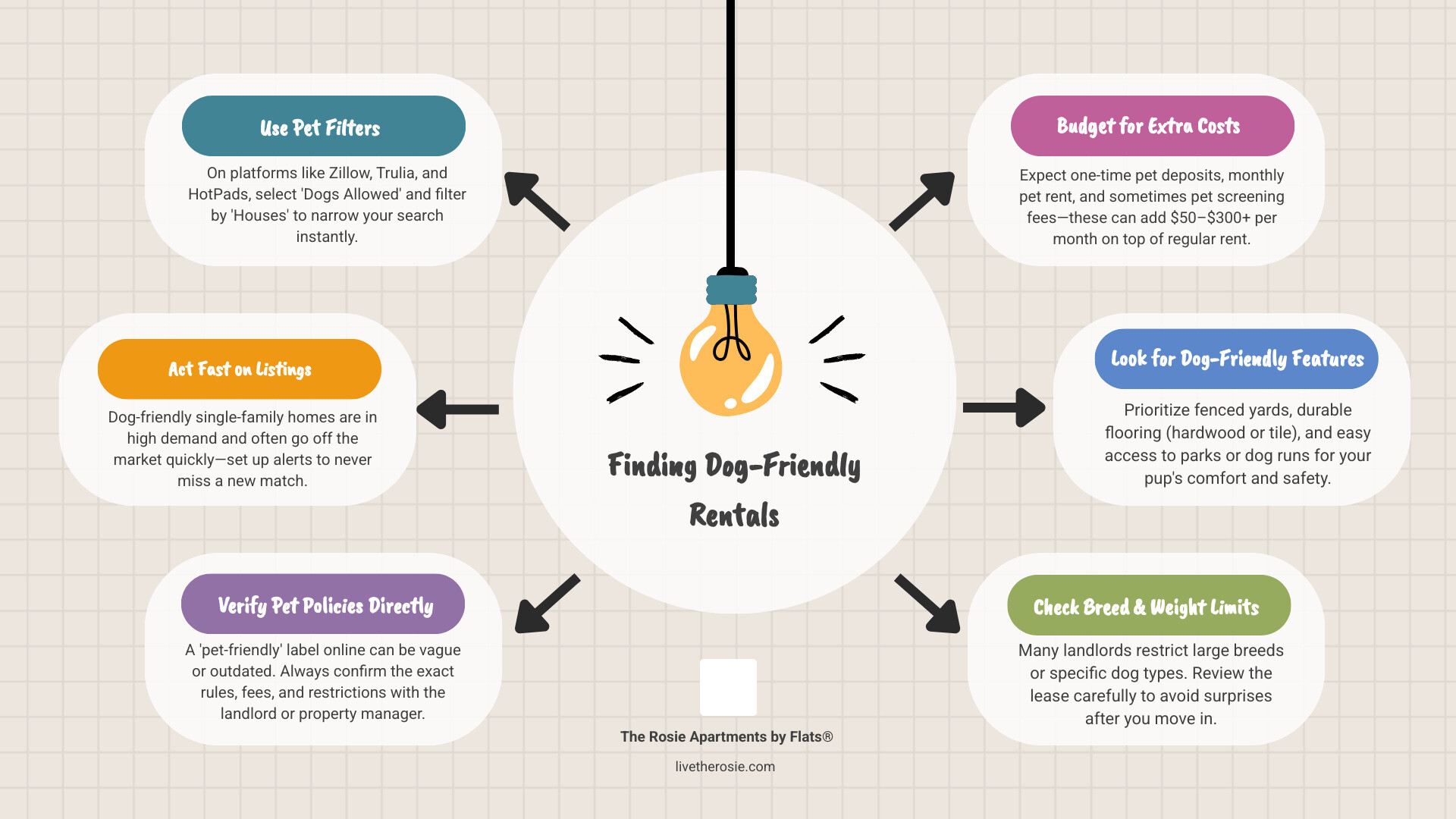
Quick-start checklist for finding dog-friendly rentals:
- Use pet filters on platforms like Zillow, Trulia, HotPads, Zumper, and Rent.com — select "Dogs Allowed" and "Houses" at the same time
- Check availability fast — dog-friendly single-family homes go quickly in competitive markets
- Save your search to get email alerts when new listings match your criteria
- Verify the pet policy directly with the landlord — "pet-friendly" labels online can be vague or outdated
- Budget for extra costs — expect one-time pet fees, monthly pet rent, and sometimes a pet screening fee
- Look for key features — fenced yards, durable flooring, and proximity to parks matter a lot for dogs
Finding a rental that truly works for you and your dog is genuinely challenging. The number of listings that carry a "pet-friendly" label can be misleading — what that tag actually means varies widely from one landlord to the next.
One property might welcome all dogs with open arms. Another might allow only one dog under 25 lbs, exclude certain breeds entirely, and charge multiple fees on top of standard rent.
And availability isn't always what it seems either. Even in markets with hundreds of listed options — Virginia alone has over 1,700 pet-friendly rental houses listed — the homes that actually fit your dog's needs, your lifestyle, and your location can be a much shorter list.
For renters in urban settings especially, the search gets even trickier. Single-family houses with fenced yards are scarce in dense city neighborhoods, pushing many dog owners toward apartments — where pet policies, amenities, and community design matter even more.
The good news: with the right strategy, you can cut through the noise and find a place where both you and your dog can feel at home.
Understanding Pet Policies and Fees

When navigating listings for houses for rent near me dog friendly, understanding the fine print of a pet policy is just as important as checking the square footage. A property that is advertised as "pets allowed" does not automatically mean every dog is welcome without conditions. Landlords and property management companies establish specific rules to protect their properties, manage liability, and ensure a harmonious environment for all residents.
To find the right home, renters must look beyond the initial search results. A complete understanding of standard fees, screening processes, and lease terms can prevent unexpected surprises during the application phase. For a deeper dive into how these rules function across different property types, reviewing a comprehensive pet-friendly rentals guide 2026 can provide valuable context.
Standard Pet Deposits and Fees
Renting with a dog almost always comes with additional financial responsibilities. Landlords typically structure these costs in three distinct ways: refundable pet deposits, non-refundable pet fees, and ongoing monthly pet rent.
A pet deposit functions similarly to a standard security deposit. The funds are held by the landlord during the tenancy and can be used to repair any physical damage caused by the dog, such as scratched woodwork or damaged carpeting. If the property is returned in excellent condition, this deposit is returned to the tenant at the end of the lease.
In contrast, a pet fee is a one-time, non-refundable charge paid at move-in. This fee is flat-rate compensation to the landlord for the general wear and tear that animals naturally introduce to a living space.
Finally, monthly pet rent is an ongoing fee added to the base rental rate. This fee covers the microscopic risks and minor upkeep associated with hosting pets on the property. Some modern rental communities also utilize third-party pet screening services, which require a small, one-time application fee to verify the dog’s behavioral history, vaccination records, and overall profile.
| Fee Type | Refundable? | Payment Frequency | Purpose |
|---|---|---|---|
| Pet Deposit | Yes | One-time (at move-in) | Covers physical damage beyond normal wear and tear |
| Pet Fee | No | One-time (at move-in) | Compensates landlord for general wear and tear |
| Pet Rent | No | Monthly | Covers ongoing maintenance and property risk |
Common Breed and Weight Restrictions
Even when a landlord permits dogs, the rental agreement will often outline specific limitations regarding weight and breed. Many properties establish a maximum weight limit, frequently restricting dogs to small or medium sizes. These limits are often put in place to protect flooring and minimize noise transmission between floors in multi-family buildings or closely spaced townhomes.
Additionally, breed restrictions are common in rental agreements. These restrictions are frequently dictated by the landlord's commercial property insurance policy rather than personal preference. Many standard insurance policies will not cover liability for specific breeds, forcing property owners to exclude them from the premises.
When reviewing a lease, it is essential to ensure that the dog's specific details are accurately documented. A standard pet agreement should allow a maximum of two pets, and the lease must explicitly state that the specific dog has been approved to occupy the home.
Key Features to Look For in Houses for Rent Near Me Dog Friendly
A property that is legally dog-friendly isn't always practically dog-friendly. To ensure a comfortable daily routine, renters need to evaluate both the immediate surroundings of the home and the interior design. The right combination of outdoor accessibility and low-maintenance indoor finishes can make a significant difference in the daily life of a pet owner.
When searching for dog-friendly rentals near me, prioritizing specific layout designs and neighborhood amenities will save time and effort over the course of a lease.
Outdoor Spaces and Pet Amenities
For dog owners, direct access to the outdoors is one of the most desirable features of a rental home. When evaluating single-family houses, a fully enclosed yard is a major advantage, allowing dogs to spend time outside without constant supervision. However, in dense urban environments like Chicago, private yards are rare, which makes community amenities highly valuable.
Many modern residential buildings now feature dedicated outdoor pet areas to bridge this gap. Look for properties that offer:
- On-site dog runs: Dedicated, secure spaces where dogs can stretch their legs.
- Rooftop pet areas: Convenient, elevated green spaces that allow for quick outings without leaving the building.
- Proximity to public parks: Easy access to local green spaces and walking trails for daily exercise.
These features are especially helpful during inclement weather, providing a nearby solution for daily routines.
Interior Layouts and Flooring
The interior finishes of a rental home play a major role in how easily a tenant can maintain a clean, damage-free living space. Certain materials are far more resilient to the daily activities of a dog than others.
Carpeted floors are highly susceptible to staining, trapping odors, and wearing down quickly under high foot and paw traffic. For this reason, properties featuring hard surface flooring are highly preferred. Hardwood flooring, luxury vinyl plank, and tile are durable, simple to sanitize, and highly resistant to scratches.
Additionally, open-concept layouts can make it easier to keep an eye on pets throughout the day, while dedicated entryways or mudrooms provide a perfect spot to wipe down muddy paws before entering the main living areas.
Effective Search and Negotiation Strategies
Securing a great dog-friendly rental requires a proactive approach and clear communication. Because pet-friendly properties are in high demand, renters who prepare their documentation in advance and know how to navigate online platforms will have a distinct advantage.
Utilizing a pet-friendly homes complete guide 2026 can help renters organize their search and approach landlords with confidence.
Utilizing Online Search Filters for Houses for Rent Near Me Dog Friendly
The most efficient way to begin a search is to use the advanced filtering tools available on major rental platforms. When searching for houses for rent near me dog friendly, applying multiple filters simultaneously is key to narrowing down the options.
- Combine filters: Select both "Dogs Allowed" and "Houses" or "Townhomes" to filter out properties that do not accommodate pets.
- Save searches: Set up automatic email alerts on platforms like Zillow or HotPads to receive notifications the moment a new dog-friendly listing goes live.
- Look for detailed descriptions: Read the property remarks carefully, as some landlords will specify weight limits or pet policies directly in the text.
Verifying Policies for Houses for Rent Near Me Dog Friendly to Avoid Scams
The high demand for pet-friendly housing can unfortunately attract fraudulent listings. Scammers often copy legitimate listings, lower the price, and advertise them as pet-friendly to attract quick inquiries.
To protect against fraud, always verify the property's policies directly with the property manager or landlord. Request an in-person or live video tour of the property before sending any funds or personal information. When reviewing the lease, ensure that all pet policies, fees, and deposits are clearly written into the contract. Verbal agreements are not legally binding, and having every detail documented in writing protects both the tenant and the pet.
Frequently Asked Questions About Dog-Friendly Rentals
What is the difference between a pet deposit and pet rent?
A pet deposit is a one-time payment made at the start of the lease that is held in escrow. It is fully refundable at the end of the tenancy, provided the dog has not caused damage to the property beyond normal wear and tear. Pet rent, on the other hand, is a non-refundable monthly fee that is added to the base rent. This fee is a permanent cost of housing a pet on the property and is not returned to the tenant under any circumstances.
How can renters verify if a house is truly dog-friendly?
The only way to fully verify a property's pet policy is to read the official lease agreement. Even if an online listing is marked as "dog-friendly," the landlord may have specific rules regarding size, breed, or the number of pets allowed. Before signing, ensure there is a dedicated pet addendum that explicitly names your dog, details the agreed-upon fees, and outlines the rules for pets on the property.
Can landlords restrict specific dog breeds?
Yes. Landlords generally have the legal right to restrict specific dog breeds from their properties. These restrictions are often driven by the terms of the landlord's property insurance policy, which may exclude coverage for certain breeds. To avoid issues during the application process, always disclose your dog's breed upfront and ask about any specific restrictions before paying application fees.
Conclusion
Finding the perfect home for you and your dog requires careful planning, but the effort is well worth it. By understanding pet policies, focusing on durable interior features, and utilizing smart search strategies, you can find a space that offers comfort and convenience for your entire household.
For those seeking an exceptional living experience in Chicago, luxury apartments can offer an outstanding alternative to traditional single-family homes. Located in the vibrant Pilsen neighborhood, pet-friendly apartments Chicago at The Rosie combine modern urban living with premium pet amenities. With features like an outdoor pool, a rooftop deck, and dedicated pet-friendly facilities, finding a welcoming community for you and your dog has never been easier.


