



Why Finding the Right Apartment in Chicago Matters
Apartments Chicago for rent are plentiful—with over 21,000 options across the city—but finding the right one requires understanding the local market, neighborhoods, and rental process. Whether drawn to high-rise luxury in the Loop or vintage charm in Logan Square, Chicago offers diverse living options to match every lifestyle.
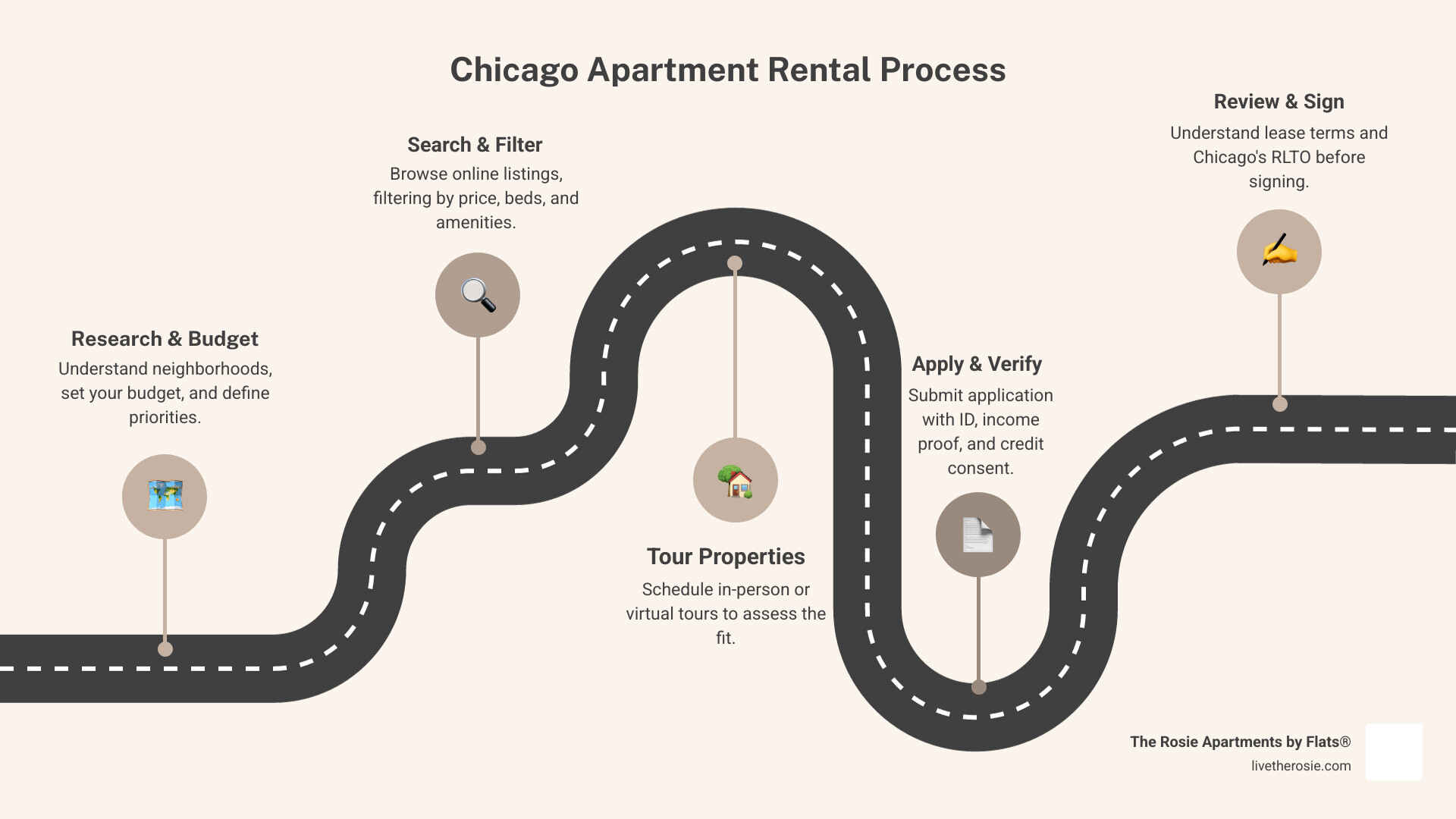
Quick Guide to Renting in Chicago:
- Search online platforms - Use listing sites like Apartments.com, Zillow, or Domu to browse available rentals
- Filter by priorities - Narrow options by price, bedrooms, location, and amenities like parking or pet policies
- Schedule tours - Visit properties in person or take virtual tours to assess fit
- Prepare documents - Gather photo ID, proof of income, and consent for credit checks
- Review and sign lease - Understand the lease terms and Chicago's Residential Landlord and Tenant Ordinance (RLTO)
Chicago's rental landscape spans from sleek high-rises with city views to historic courtyard buildings with hardwood floors. The city's neighborhoods each offer distinct character—from the restaurant-filled West Loop to the artistic murals of Pilsen. Understanding these options helps find not just an apartment, but a home that fits daily life.
The rental market moves with the seasons. Spring and summer bring peak competition as leases expire, while fall and winter typically offer less crowded searches. Average rents vary significantly by size: studios and one-bedrooms average around $1,873 per month, while two-bedrooms climb to approximately $2,378.
Most rentals require standard documentation—income verification, credit checks, and references—but Chicago's renter protections under the RLTO provide important safeguards for tenants. Knowing these details before starting a search saves time and reduces stress.
The following guide breaks down everything to know: apartment styles, neighborhood characteristics, market costs, the application process, and the amenities that matter most to Chicago renters.
Exploring Chicago's Diverse Apartment Styles
Chicago's architectural variety means renters can find a living space that truly reflects their personal style and needs. From towering modern structures to charming historic dwellings, the city offers a wide array of apartment types. Understanding these options helps identify which building type aligns with a renter's lifestyle preferences.
The selection of apartments Chicago for rent includes a spectrum of styles:
- High-rise buildings: Often found in the downtown area and along the lakefront, offering modern living and extensive amenities.
- Vintage walk-ups: Common in many established neighborhoods, providing historic charm and unique layouts.
- Courtyard buildings: These offer a sense of community with shared green spaces, often found in North Side neighborhoods.
- Loft-inspired layouts: Popular in converted industrial areas, featuring open spaces and distinctive architectural elements.
- Modern apartment complexes: New constructions across the city providing contemporary designs and a full suite of services.
High-Rise Living: Amenities and Views
High-rise apartments are a hallmark of urban living in Chicago, especially in areas like the Loop, River North, and Lincoln Park. These buildings often provide residents with an unparalleled array of amenities and breathtaking city views.
Pros of high-rises:
- Building amenities: Many high-rise buildings boast state-of-the-art fitness centers, resident lounges, business centers, and sometimes even indoor pools or basketball courts.
- Concierge services: Improved security, package handling, and personalized assistance are common features.
- City views: Panoramic vistas of the Chicago skyline, Lake Michigan, or the city's vibrant neighborhoods are a significant draw. Apartments with city views can transform everyday living into an experience.
- Convenience: Often located near public transportation, dining, and entertainment.
Cons of high-rises:
- Shared spaces: While amenities are abundant, they are shared with many other residents, which can sometimes lead to crowding.
- Potential for higher costs: The extensive amenities and prime locations often come with a premium in rent.
For those interested in exploring this type of urban dwelling, more information on High Rise Apartments is available. Individuals seeking compact yet stylish living might also consider Chicago Studio Apartments for Rent.
Vintage Charm: Walk-Ups and Courtyard Buildings
For renters who appreciate character and a sense of history, Chicago's vintage walk-ups and courtyard buildings offer an appealing alternative to modern high-rises. These buildings are scattered throughout the city's older neighborhoods, providing a distinct residential experience.
- Historic architecture: Many feature intricate brickwork, decorative facades, and classic design elements from earlier eras.
- Neighborhood feel: These buildings are often integrated into residential blocks, contributing to a strong community atmosphere.
- Unique floor plans: Unlike the often standardized layouts of newer constructions, vintage apartments frequently offer idiosyncratic and charming floor plans.
- Hardwood floors: Original hardwood floors are a common feature, adding warmth and elegance.
- Classic details: Built-in cabinetry, crown molding, and ornate fixtures can be found, preserving a sense of the past.
While they exude charm, vintage properties may come with fewer modern amenities compared to luxury high-rises. However, the trade-off for a unique, character-filled living space is often well worth it for many Chicago renters.
Industrial-Inspired: Loft-Style Apartments
Loft apartments represent a unique segment of apartments Chicago for rent, particularly popular in areas that were once industrial districts, such as West Loop, River North, and Pilsen. These spaces are often converted from old factories, warehouses, or commercial buildings, retaining elements of their original structure while offering modern residential comforts.
- Open-concept layouts: Lofts typically feature large, undivided living spaces, providing flexibility in design and furniture arrangement.
- High ceilings: Soaring ceilings create an expansive and airy feel, often allowing for oversized windows.
- Exposed brick: Original brick walls are frequently preserved, adding a rustic yet chic industrial aesthetic.
- Large windows: Abundant natural light is a hallmark of loft living, often through oversized windows that once served industrial purposes.
- Modern finishes: While retaining industrial elements, lofts are updated with contemporary kitchens, bathrooms, and fixtures for comfortable living.
Loft apartments appeal to those seeking a distinctive, artistic, and spacious living environment, often with a connection to the city's rich industrial past.
A Renter's Guide to Chicago's Top Neighborhoods
Chicago is a city of neighborhoods, each with its own distinct personality, amenities, and rental landscape. Exploring these areas is key to finding the perfect home among the many apartments Chicago for rent.
From the green spaces of Lincoln Park to the culinary scene of the West Loop, and the vibrant arts of Pilsen, understanding neighborhood characteristics and public transit access is crucial.
North Side Hubs: Lincoln Park & Lakeview
Lincoln Park and Lakeview are two of Chicago's most sought-after North Side neighborhoods, known for their beautiful parks, lakefront access, and vibrant community life.
- Proximity to Lake Michigan: Both neighborhoods offer easy access to the lakefront, including beaches, parks, and recreational trails.
- Green spaces: Lincoln Park is home to the expansive Lincoln Park, featuring a zoo, nature museum, conservatory, and plenty of open space.
- Entertainment venues: Residents enjoy a wide array of theaters, music venues, and nightlife options.
- Boutiques and dining: Both areas are rich with independent shops, popular restaurants, and lively cafes.
Rental options range from charming vintage walk-ups to modern mid-rises, with Lincoln Park High Rises providing a luxurious option. For families considering these areas, learning more about school ratings can be helpful.
Downtown & West: The Loop, West Loop & River North
For those seeking a dynamic, urban experience, the downtown and near-west neighborhoods offer an unparalleled lifestyle.
- The Loop: As Chicago's central business district, the Loop is a hub of corporate activity, iconic architecture, and cultural institutions. Rental options here are predominantly high-rise apartments, providing direct access to work and entertainment.
- West Loop: Once a meatpacking district, the West Loop has transformed into a culinary hotspot, boasting an impressive restaurant scene, art galleries, and trendy boutiques. It's a popular choice for those valuing walkability and exceptional dining. Information on Walk Score can be useful for assessing this area.
- River North: Known for its art galleries, design showrooms, and upscale nightlife, River North offers a sophisticated urban environment. Luxury high-rises and converted lofts are common here.
These areas are ideal for individuals who thrive on city energy and desire immediate access to Chicago's finest offerings. Luxury Living Downtown Chicago is a key aspect of these neighborhoods.
Cultural Vibrancy: Pilsen & Logan Square
Pilsen and Logan Square represent Chicago's rich cultural mix, offering vibrant communities with unique artistic flair and diverse culinary scenes.
- Pilsen: This historic neighborhood is celebrated for its incredible street art, colorful murals, and strong Mexican heritage. It offers a lively atmosphere with independent shops, art galleries, and an authentic culinary landscape. For a deeper dive, explore the Apartments Pilsen Chicago Ultimate Guide and find Pilsen Neighborhood Restaurants. The Rosie, located in Pilsen, exemplifies the modern living experience within this culturally rich area.
- Logan Square: Characterized by its historic boulevards, stunning architecture, and a thriving arts and music scene, Logan Square is a popular choice for those seeking a blend of urban cool and residential charm. It features diverse culinary options, independent boutiques, and a strong sense of community.
Both neighborhoods offer a mix of vintage apartments, converted lofts, and newer developments, appealing to renters looking for character and a strong local identity.
Decoding Rental Costs and Market Trends for apartments Chicago for rent
Understanding the financial landscape and market dynamics is crucial when searching for apartments Chicago for rent. Rental costs can vary significantly based on apartment size, neighborhood, and the time of year.
Average Rent by Apartment Size
The average rent for apartments in Chicago can provide a baseline for budgeting. These figures represent city-wide averages and can fluctuate based on specific locations and property features.
| Apartment Size | Average Square Footage | Average Rent |
|---|---|---|
| Studio | 500 sq ft | $1,873 |
| 1-Bedroom | 660 sq ft | $1,873 |
| 2-Bedroom | 922 sq ft | $2,378 |
| 3-Bedroom | 1,177 sq ft | $2,846 |
| 4-Bedroom | 1,453 sq ft | $3,333 |
Note: The average rent for a 1-bedroom apartment in Chicago is approximately $1,873. The average rent for a 2-bedroom apartment is approximately $2,378. The average rent for a 3-bedroom apartment is approximately $2,846. The average rent for a 4-bedroom apartment is approximately $3,333.
These figures highlight how rent generally increases with the number of bedrooms and square footage. Rent in specific neighborhoods, such as Pilsen, can be further explored through resources like Pilsen Chicago Rent.
Understanding Seasonal Market Fluctuations
The Chicago rental market experiences distinct seasonal trends that can impact availability and competition.
- Peak rental season (spring/summer): The months from May through August typically see the highest demand for rentals. Many leases expire during this period, leading to a greater inventory of available apartments Chicago for rent. However, this also means increased competition, potentially leading to faster decision-making and fewer opportunities for negotiation.
- Off-peak season (fall/winter): From September to April, the market generally slows down. While fewer new listings may appear, there is less competition, which could offer renters more time to search and potentially find unique offerings.
- Timing your search: Searching towards the end of any given month can sometimes reveal new listings as tenants provide notice for month-end lease expirations. Keep an eye out for potential One Bedroom Move In Specials that might be offered during slower periods.
Understanding these fluctuations allows renters to strategize their search and potentially find a home that perfectly matches their needs.
The Step-by-Step Process for Renting in Chicago
Navigating the rental market in a large city like Chicago can seem daunting, but a structured approach simplifies the journey. This section outlines the process from initial search to lease signing for apartments Chicago for rent.
How to Search for apartments Chicago for rent
The first step in finding an apartment involves thorough research and utilizing available tools.
- Using online listing sites: Platforms like Apartments.com, Zillow, and Domu are invaluable resources. They aggregate thousands of listings, providing photos, virtual tours, and detailed property information.
- Filtering your search: Use the extensive filtering options on these sites. Renters can narrow down choices by price range, number of bedrooms and bathrooms, desired amenities (e.g., pet-friendly, parking, in-unit laundry), and specific neighborhoods or zip codes.
- Setting up alerts: Most platforms allow users to save searches and receive email alerts when new listings matching their criteria become available. This ensures staying updated on new opportunities.
- Scheduling tours: Once a few promising options are identified, schedule viewings. Many properties offer virtual tours, which are a great initial screening tool. In-person viewings provide a better sense of the space, building, and neighborhood.
For a comprehensive approach to finding a home, a dedicated Chicago Apartment Search can streamline the process.
Application and Leasing
Once a suitable apartment is found, the next phase involves the application process and understanding the lease agreement.
- Required documents: Landlords and property managers typically require a completed application form, a government-issued photo ID, and proof of income. This might include recent pay stubs, an employment offer letter, or bank statements. Some may also request references from previous landlords or employers.
- Application fees: An application fee is often charged to cover the cost of background and credit checks.
- Credit checks: A good credit history is generally preferred, as it indicates financial responsibility.
- Income verification: Landlords usually look for an income that is a certain multiple of the monthly rent (e.g., 2.5x to 3x the rent).
- Understanding the lease agreement: Before signing, carefully read and understand all terms and conditions of the lease. This legally binding document outlines responsibilities, rent payment schedules, lease duration, rules regarding pets, maintenance, and termination clauses.
- Chicago Residential Landlord and Tenant Ordinance (RLTO): Chicago has specific tenant protection laws. Renters should familiarize themselves with the RLTO, which outlines rights and responsibilities for both tenants and landlords. Resources for both tenant and landlord information can be found through local guides.
Thorough preparation for this stage helps ensure a smooth transition into a new home.
In-Demand Amenities for Chicago Renters
The right amenities can significantly improve the living experience in apartments Chicago for rent. Beyond the basic living space, certain features and community offerings are highly sought after by renters in the city.
- In-unit laundry: A perennial favorite, providing the convenience of washing clothes without leaving the apartment.
- Pet-friendly policies: With many Chicagoans having pets, apartments that welcome animals are in high demand.
- Parking: A crucial amenity in a dense urban environment, whether it's a dedicated garage space or an outdoor lot.
- Fitness centers: On-site gyms eliminate the need for an external membership and offer convenience.
- Outdoor space: Balconies, patios, and communal rooftop decks provide opportunities for fresh air and relaxation.
- Rooftop decks: Offering stunning city views and a place for socializing or quiet enjoyment.
- Pools: Especially popular in warmer months, providing a recreational escape.
Detailed information on modern features can be found in the Modern Apartment Features Ultimate Guide.
Convenience and Lifestyle Amenities
Modern living often prioritizes convenience. Renters in Chicago frequently look for amenities that simplify daily tasks and improve their lifestyle.
- In-unit washer and dryer: This is a top-tier amenity, saving time and effort compared to shared laundry facilities or laundromats.
- Dishwashers: A standard expectation in many modern apartments, making kitchen cleanup effortless.
- Air conditioning: Essential for Chicago's hot and humid summers, ensuring comfort indoors.
For those prioritizing fitness, Chicago Apartments With Gym are highly desirable. During the summer, access to a refreshing swim can be a game-changer, making Chicago Rentals With Pool a popular search criterion.
Finding Pet-Friendly apartments Chicago for rent
For many, a home isn't complete without their beloved animal companions. Finding apartments Chicago for rent that welcome pets is a significant factor for a large segment of the rental population.
- Pet policies: These vary widely among properties. It is important to inquire about specific rules regarding the types of animals allowed.
- Pet fees: Many landlords charge a one-time non-refundable pet fee or a recurring monthly pet rent.
- Dog runs: On-site or nearby dog runs are a fantastic amenity for dog owners, providing a convenient space for exercise. Resources like the Chicago Apartments Complete Dog Runs Guide can help locate these.
- Pet washing stations: A dedicated area for cleaning pets after walks can be a great convenience.
For a comprehensive overview of options, the Pet-Friendly Apartments Chicago Ultimate Guide can assist in the search.
Outdoor and Community Spaces
Beyond the individual unit, shared outdoor and community spaces play a vital role in fostering a sense of belonging and providing opportunities for relaxation and socialization.
- Rooftop patios: These offer residents a communal area with often spectacular views of the city skyline, perfect for unwinding or entertaining.
- Grilling stations: Many properties include communal grilling areas, ideal for outdoor cooking and gatherings.
- Resident lounges: These indoor common areas provide comfortable spaces for residents to relax, work, or socialize.
- Co-working spaces: Increasingly popular, these dedicated areas offer a quiet and productive environment for remote work.
For those interested in liftd outdoor living, the Rooftop Apartments Chicago Guide provides further insights. These communal amenities contribute significantly to the appeal of modern apartment living in Chicago.
Frequently Asked Questions about Renting in Chicago
What is the average rent for an apartment in Chicago?
The average rent in Chicago varies by apartment size and neighborhood. For a one-bedroom apartment, the city-wide average is approximately $1,873, while a two-bedroom averages around $2,378. Prices can be higher in central neighborhoods and lower further from the city center.
What is the best time of year to look for an apartment in Chicago?
The busiest rental season is spring and summer, offering the most inventory but also the highest competition. Fall and winter typically have less competition, which may present different opportunities for renters. Searching toward the end of any given month can also be beneficial as many leases expire at that time.
What documents do I need to apply for an apartment?
Most landlords or property managers require a completed application form, a government-issued photo ID, proof of income (such as pay stubs or an offer letter), and consent for a credit and background check. Some may also ask for references from previous landlords.
Your New Chicago Apartment Awaits
Finding the right apartment in Chicago is an exciting journey into the heart of a world-class city. By understanding the different apartment types, exploring the unique character of each neighborhood, and knowing what to expect from the rental process, a renter is well-equipped to find a space that fits their lifestyle. For those seeking a blend of modern design and premium amenities in the vibrant Pilsen neighborhood, The Rosie Apartments by Flats® offers an exceptional living experience. Find your next home and explore the possibilities that await in the Windy City. Find your new high-rise apartment today


