



Finding Pet-Friendly Apartments Near You: What Renters Need to Know
If you're searching for apartments for rent near me that accept pets, here are the key things to know right away:
- Pet-friendly apartments do exist in large numbers — in cities like Chicago, Los Angeles, and San Francisco, more than half of all rental units allow pets.
- Most properties that accept pets allow cats and dogs only, typically up to two pets per unit.
- Expect extra fees — a one-time pet deposit and a monthly pet rent charge are both common.
- Breed and size restrictions apply at many buildings, even those that advertise as pet-friendly.
- Service animals and emotional support animals are handled differently from pets under federal fair housing law.
- Use pet filters on rental platforms (Zillow, Apartments.com, HotPads) to narrow your search by cat-friendly or dog-friendly listings.
Finding the right place takes more than just spotting the "pets allowed" label on a listing. Policies vary widely — from weight limits and breed bans to DNA tracking programs and third-party pet screening services. Knowing what to look for (and what to ask) before you apply can save a lot of time and stress.
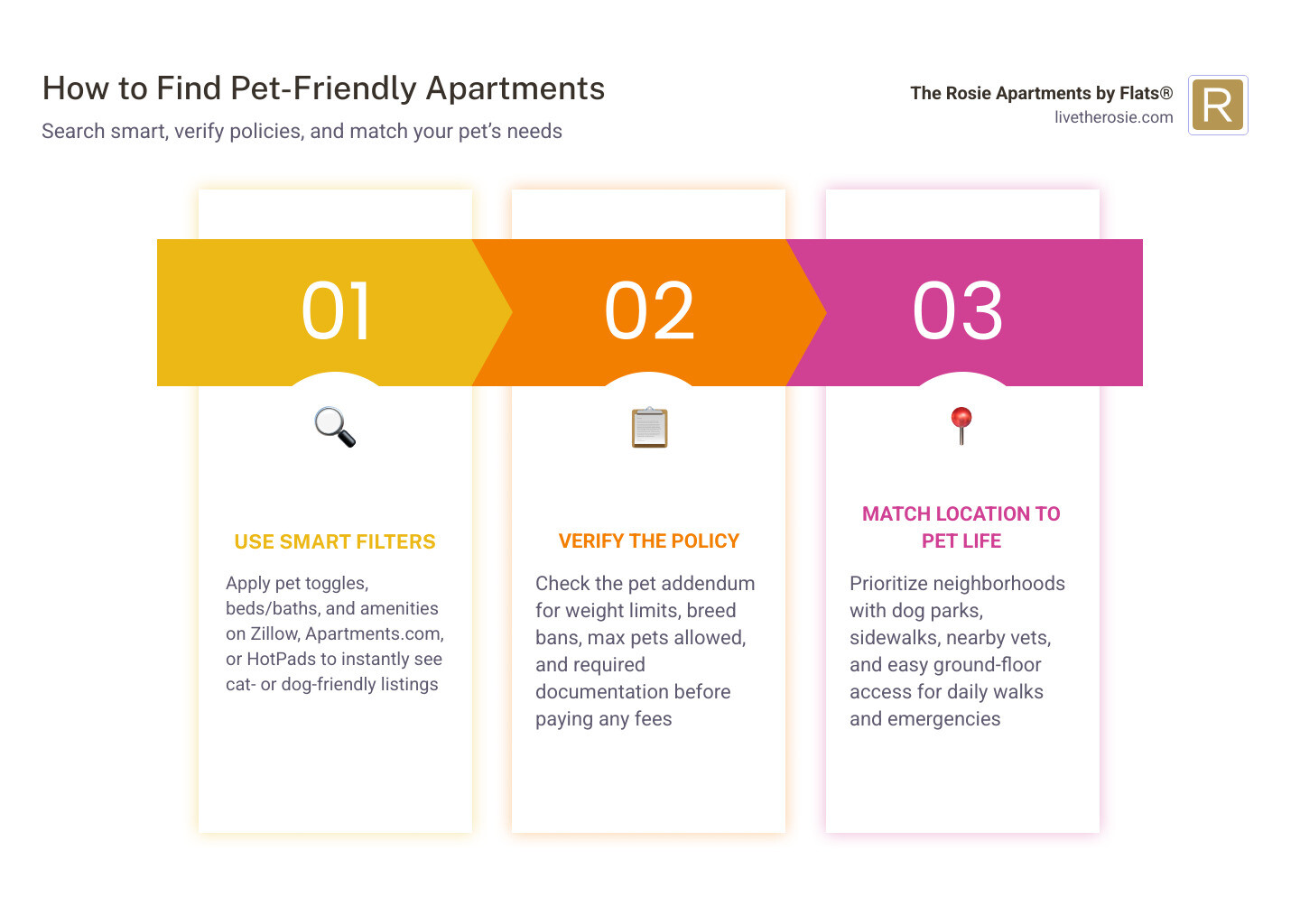
1. How to Find Apartments for Rent Near Me That Accept Pets
Finding pet-friendly rentals usually starts with search tools, but the best results come from using those tools carefully. A listing that says "pets allowed" is only the beginning. The real details are often buried in the policy section, lease notes, or pet addendum.
For a deeper walkthrough, see the Ultimate Pet Friendly Apartment Guide.

Use the Right Filters for apartments for rent near me that accept pets
The fastest way to narrow the search is to turn on pet-related filters first, then layer in the basics:
- Cats allowed
- Dogs allowed
- Studio, 1 bed, or 2 bed
- Baths
- Home type
- Building amenities
- Parking or elevator access
- Outdoor space
Map view is especially useful in Chicago because neighborhood fit matters almost as much as the building itself. A great apartment can feel much less great after the fifth late-night potty walk around blocks with limited green space.
Search by neighborhood and zip code, not just city name. That makes it easier to compare walkability, pet services, and access to parks.
Verify the Policy Before Applying to apartments for rent near me that accept pets
Before paying any application fee, confirm the full pet policy in writing. That step matters because "pet-friendly" can still mean:
- Cats only
- Dogs only
- Maximum of two pets
- Weight limit
- Breed restrictions
- Extra monthly charges
- Required pet screening
- Vaccination records
- Separate pet addendum
It also helps to ask whether written approval is needed before move-in. Some communities allow pets only after management signs off on the animal's profile and records.
If an assistance animal is part of the household, the approval process is different from a standard pet approval process. Those requests should be reviewed under fair housing rules rather than ordinary pet rules.
Search by Neighborhood, Commute, and Pet Needs
The right apartment for pet owners is not just about the unit. It is also about day-to-day logistics.
Look for:
- Nearby parks or green space
- Comfortable walking routes
- Pet stores and veterinary clinics
- Easy elevator or stair access
- Ground-floor convenience when needed
- Waste stations or relief areas
- Buildings with pet washing areas or dog runs
Chicago renters can also benefit from hyper-local searching. Comparing one neighborhood to another often reveals major differences in sidewalks, green space, and pet-friendly amenities.

2. The 7 Best Features to Look for in a Pet-Friendly Apartment
A true pet-friendly apartment is more than a lease that says "yes." The best buildings make daily life easier for both pets and people.
For more building-focused ideas, visit Pet Friendly Apartment Complexes.
Here are the seven best features to look for.
1) Clear pet policy
This is the biggest one. A solid pet policy should explain:
- Whether cats, dogs, or both are allowed
- The two-pet limit
- Deposit requirements
- Monthly pet rent
- One-time pet fees
- Whether fees are refundable or non-refundable
- Any weight or breed restrictions
- Required records or screening
Clear beats cute every time. "Pets welcome" sounds nice. "Dogs and cats allowed, up to two pets, with written approval and defined fees" is much more useful.
2) Pet-focused amenities
Some buildings go beyond simple acceptance and include features that actually support pet ownership.
Look for:
- Dog wash stations
- Bark parks or fenced runs
- Waste bag stations
- Relief areas
- Outdoor pet space
These amenities reduce mess, improve convenience, and make daily routines smoother.
3) Practical in-unit features
Inside the apartment, the best pet-friendly features are often the least flashy.
Helpful features include:
- Hard-surface flooring
- Easy-clean finishes
- In-unit washer and dryer
- Strong sound insulation
- Private patio or balcony, if allowed by the lease
A beautiful unit is great. A beautiful unit that is easy to clean after muddy paws is even better.
4) Building convenience
Pet owners usually notice building design details quickly.
Helpful convenience features include:
- Elevators
- Easy entry routes
- Secure package rooms for pet supplies
- Responsive maintenance
- Well-lit common areas
- Straightforward move-in procedures
These details may sound small, but they add up fast when carrying food bags, leashes, and a very opinionated cat carrier.
5) Neighborhood fit
Even the best apartment can be a mismatch if the surrounding area does not support pet life.
A strong neighborhood fit includes:
- Sidewalks
- Green space
- Nearby parks
- Groomers
- Veterinary clinics
- Pet supply stores
In Chicago, this can shape the day-to-day experience more than almost anything inside the building.
6) Reasonable restrictions
Most pet-friendly buildings have rules. The goal is not "no rules." The goal is clear, practical rules.
Common examples include:
- Size limits
- Two-pet maximum
- Vaccination requirements
- Pet registration
- DNA-based waste tracking in some communities
Restrictions are easiest to manage when they are published clearly before application.
7) Transparent application steps
Pet approval is often its own mini-process. The easiest buildings explain that process upfront.
Look for clarity around:
- Pet screening
- Required photos
- Veterinary records
- Breed list review
- Move-in timing
- Pet addendum signing
When these steps are vague, delays usually follow.
3. Pet Fees, Deposits, and Monthly Charges Explained
One of the biggest surprises for renters is how many different pet-related charges can show up in a lease. A pet-friendly apartment may include one, two, or several of the following:
- Pet deposit
- One-time pet fee
- Monthly pet rent
- Separate cleaning charges at move-out
- Standard security deposit
Typical Pet Costs Renters Should Expect
Research on pet-friendly rentals shows a few common patterns:
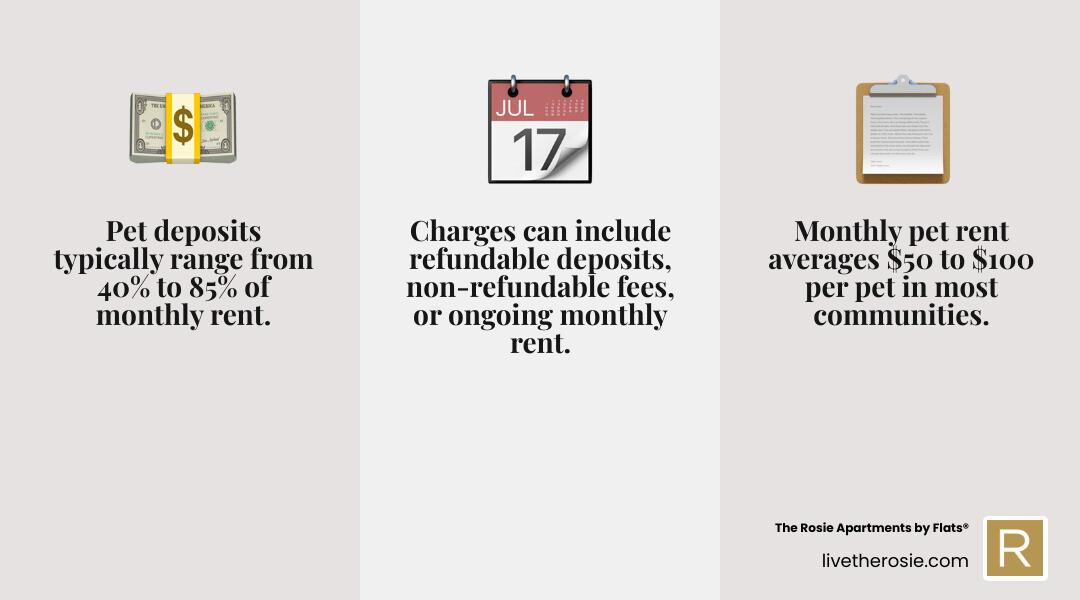
- Average pet deposits often range from about 40% to 85% of monthly rent
- Many communities charge monthly pet rent in the range of $50 to $100 per pet
- One-time pet fees are also common
- Charges are often assessed per pet
That means renters should budget for both move-in costs and ongoing monthly costs. The lease should show whether the charge is a deposit, a fee, or rent, because those are not the same thing.
| Charge type | How it usually works | What to check |
|---|---|---|
| Pet deposit | Paid upfront at move-in | Whether it is refundable |
| One-time pet fee | Paid once | Whether it is non-refundable |
| Monthly pet rent | Added to regular rent each month | Whether charged per pet |
| Move-out charge | Assessed later if needed | Cleaning and damage standards |
What Pet Deposits and Pet Rent Usually Cover
Pet charges usually exist to help cover risks and added wear associated with animals in the unit or common areas. Depending on the property, that can include:
- Damage repair
- Odor treatment
- Extra cleaning
- Common-area wear
- Administrative costs
- Insurance-related expenses
This is why reading the lease language matters so much. A refundable pet deposit is different from a non-refundable pet fee. Monthly pet rent is different again, because it is an ongoing charge rather than a damage fund.
Questions to Ask Before Signing
Before signing a lease, ask these questions clearly and directly:
- Is the pet deposit refundable?
- Is there also a one-time pet fee?
- Is monthly pet rent charged per pet?
- Are there move-out cleaning standards?
- Could additional damage charges apply later?
- Does the building use pet screening or registration?
- Are there local or state rules that affect pet fees?
That last question matters because fee rules can vary by location. The safest move is to review the written lease and pet addendum before committing.
4. What Pets Are Usually Allowed and What Restrictions Are Common
In most apartment listings, "pet-friendly" usually means cats, dogs, or both. It does not automatically mean every animal type is accepted, and it definitely does not mean every policy is the same.
Helpful next reads include Pet Friendly Apartments That Take Dogs and Apartments Allowing Large Dogs.
Dogs and Cats Are Most Commonly Accepted
Across rental platforms, the most common setups are:
- Cats allowed
- Dogs allowed
- Both cats and dogs allowed
Many properties cap pet count at two pets per unit. Some also request a pet profile, photos, veterinary records, or basic temperament information as part of approval.
In practical terms, renters should never assume that "pet-friendly" includes both cats and dogs unless the listing says so clearly.
Common Restrictions to Watch For
Common pet restrictions in apartment listings include:
- Small pets only
- Weight caps such as under 45 or 50 pounds
- Breed restrictions
- No birds or certain other animals
- Vaccination requirements
- Registration with screening or monitoring systems
Some communities also require dog DNA registration for waste management. That sounds very futuristic, but in reality it is just a strict version of "please pick up after your dog."
When reviewing restrictions, focus on written policy rather than verbal summaries. That is the cleanest way to avoid surprises later.
Service Animals and Emotional Support Animals in Rentals
Service animals and emotional support animals are not handled the same way as standard pets under fair housing rules.
Key differences usually include:
- They are reviewed through a disability-related accommodation process
- Standard pet fees generally do not apply in the same way
- Documentation standards differ depending on the request and situation
- Breed or size pet rules are not the same as accommodation review standards
Because this area involves federal fair housing obligations, the process should be based on the building's accommodation policy rather than its regular pet policy. Clear written communication is important here too.
5. Large Complexes vs Private Landlords: What Changes for Pet Owners
Pet policies can look very different depending on whether the rental is in a larger apartment community or with a smaller private owner. Neither format is automatically better in every case, but they tend to differ in consistency, amenities, and transparency.
Pet Policies in Large Apartment Communities
Larger apartment communities often use standardized systems. That usually means:
- Published pet policies
- Formal pet addendums
- Set fee schedules
- Pet screening platforms
- Amenity details listed upfront
- Consistent application steps
These communities are also more likely to offer pet-friendly amenities such as wash stations, waste stations, or dedicated outdoor pet areas.
For renters who want structure and predictable policies, that level of standardization can be useful.
Pet Policies with Smaller or Private Landlords
Smaller landlords may handle pet approvals more case by case. That can sometimes mean:
- Direct communication
- Flexible review
- Simpler application steps
- Fewer building amenities
- Less publicly posted policy detail
The tradeoff is that flexibility can come with less clarity unless everything is written into the lease. If the pet terms are not documented, misunderstandings can happen later.
Which Option Gives More Transparency
In general, larger communities often provide more visible policy details before application, while smaller landlords may require more direct follow-up to get answers.
The best signs of transparency are:
- A written pet policy
- Clear fee schedules
- Defined approval steps
- Lease language that matches the listing
- Fast answers to policy questions
Transparency matters more than property size. A short, clear written policy is more helpful than a vague promise that everything will be "fine."
6. Pet-Friendly Rentals by City and Neighborhood: What Availability Looks Like in 2026
Availability varies a lot by market, but the broad trend is clear: pet-friendly rentals are common in major cities, and Chicago remains one of the places where pet owners have real options.
For current city-specific browsing, see Chicago pet-friendly apartment listings and Pet Friendly Apartments Chicago.
Where Pet-Friendly Inventory Is Most Common
Research shows that in cities such as Chicago, Los Angeles, and San Francisco, more than half of available rental units allow pets. That is a strong sign that renters searching for apartments for rent near me that accept pets are not chasing a rare unicorn listing.
Still, inventory differs by neighborhood, building type, and policy strictness. A pet-accepting listing with clear dog rules, convenient walking access, and helpful amenities is narrower than the simple phrase "pets allowed" makes it sound.
Snapshot of 2026 Availability
Examples from current rental-market research show how much inventory can vary by city:
- Las Vegas: 5,577 pet-friendly rentals
- Oklahoma City: 5,305 pet-friendly rentals
- Farmington, CT: 191 pet-friendly rentals
The point is not to compare Chicago directly to those markets. It is to show how local inventory changes by city size and housing stock. In a large city like Chicago, renters should expect neighborhood-by-neighborhood variation rather than one uniform pet-friendly market.
Chicago-specific search pages can help compare options across areas, building styles, and pet policies.
Why Neighborhood Matters as Much as the Building
For pet owners, neighborhood quality shapes daily routine:
- Easier walks
- Better park access
- Nearby grooming and vet services
- More convenient supply runs
- A smoother overall routine
That is especially true in a city setting. A rooftop deck, outdoor pool, modern finishes, and pet-friendly facilities inside the building can add a lot, but nearby sidewalks, parks, and services still matter every day.
Chicago renters looking for a balance of urban convenience and pet-friendly living often start with neighborhoods that combine strong residential comfort with city access.
Frequently Asked Questions about Apartments for Rent Near Me That Accept Pets
Do all pet-friendly apartments charge both a deposit and monthly pet rent?
No. Some charge only a deposit. Some charge a one-time fee instead. Some charge monthly pet rent. Others use a combination of all three. The only reliable answer is the written lease and pet addendum.
How can renters confirm a listing is truly pet-friendly before paying application fees?
Confirm the policy in writing before applying. Ask for:
- The full pet policy
- Any pet addendum
- The two-pet limit
- Type restrictions
- Size or breed restrictions
- Required screening steps
- All pet-related charges
If the listing is vague, contact management first. A quick policy check can prevent wasted application fees.
Are service animals and emotional support animals treated the same as pets?
No. They are generally handled through fair housing accommodation processes rather than standard pet rules. That affects how requests are reviewed and whether ordinary pet fees apply. Written policy review is the best first step.
Conclusion
The best search strategy for apartments for rent near me that accept pets is simple: filter carefully, verify policies in writing, compare neighborhoods, and review every pet-related lease term before applying.
A strong pet-friendly apartment search checklist should include:
- Cats or dogs allowed
- Two-pet policy confirmation
- Written approval steps
- Deposit, fee, and pet rent details
- Building amenities for pet life
- Neighborhood walkability and green space
- Fair housing accommodation info when relevant
For renters searching in Chicago, The Rosie Apartments by Flats® pet-friendly rentals page is a smart next stop. Additional neighborhood and pet-living resources are also available, including Pet Friendly Apartments Chicago Ultimate Guide, Dog Friendly Apartments Chicago, Pet Friendly Apartments Tips 2026, Pet Friendly Rooms for Rent Guide, and Pet Friendly Living Pilsen.
A good pet-friendly apartment should work for the whole household, fur included.


