



Why Knowing the Rules for Pets in Flats Matters More Than Ever
Pets in flats is one of the most searched topics among urban renters — and for good reason. More than half of UK households own at least one pet, yet only 7% of landlords advertise their properties as pet-friendly. That gap causes real problems: 78% of pet owners have struggled to find a flat that accepts animals.
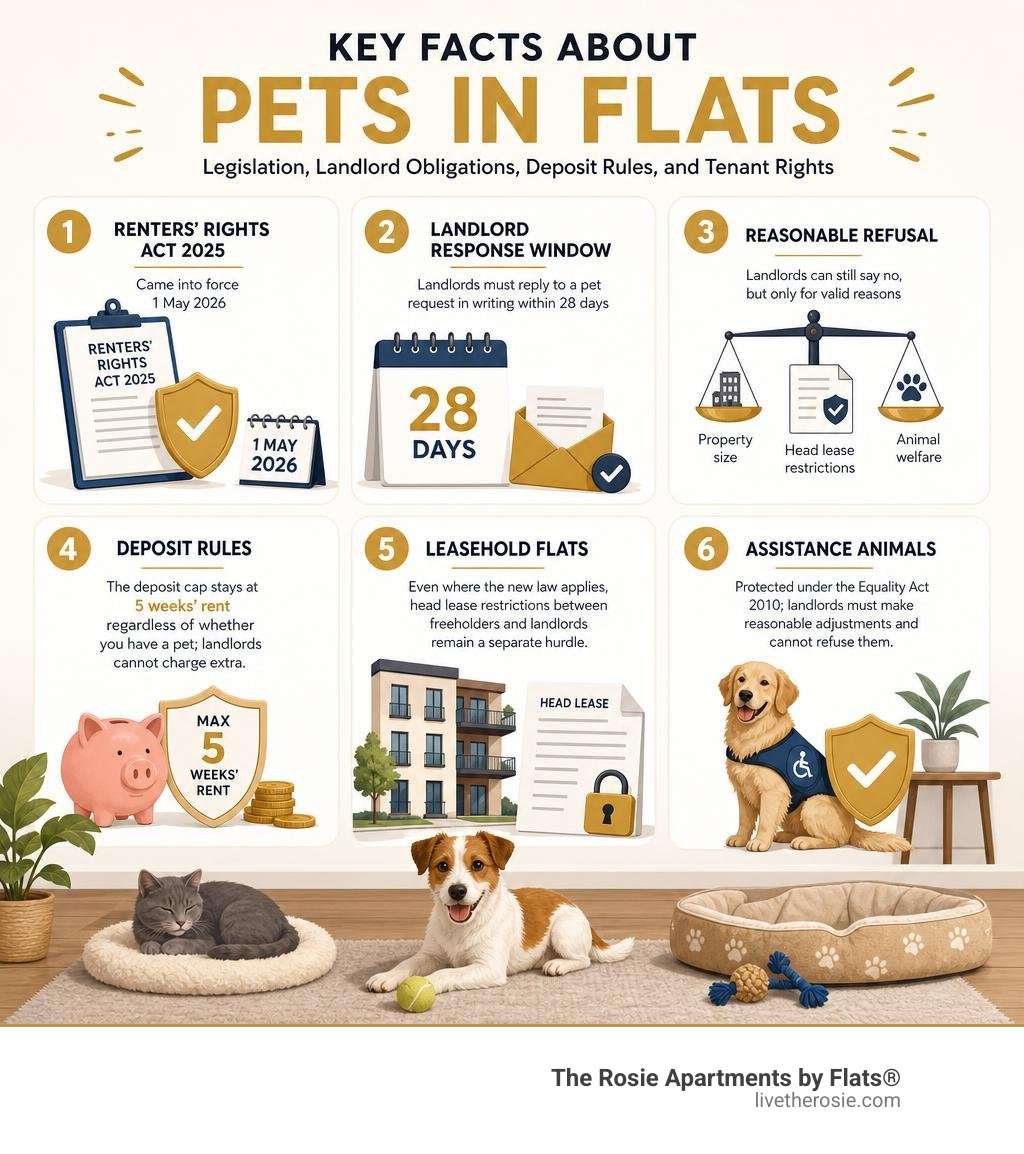
Here is a quick overview of what you need to know:
- Renters' Rights Act 2025 — came into force 1 May 2026; makes blanket "no pets" clauses void in England
- Landlord response window — landlords must reply to a pet request in writing within 28 days
- Reasonable refusal — landlords can still say no, but only for valid reasons (property size, head lease restrictions, animal welfare)
- Deposit rules — the deposit cap stays at 5 weeks' rent regardless of whether you have a pet; landlords cannot charge extra
- Leasehold flats — even where the new law applies, head lease restrictions between freeholders and landlords remain a separate hurdle
- Assistance animals — protected under the Equality Act 2010; landlords must make reasonable adjustments and cannot refuse them
Whether you are renting or own a leasehold flat, the rules are layered. There is the tenancy agreement, the lease, the freeholder's rules, and now updated legislation — all at once. This guide walks through each layer clearly, so you know exactly where you stand and what steps to take.
Understanding the Rules for Pets in Flats

Navigating the legal landscape of animal ownership in multi-unit buildings requires understanding both statutory rights and contract terms. The historical norm of landlords inserting blanket "no pets" clauses into tenancy agreements has undergone a major shift. Under the Consumer Rights Act 2015, blanket bans on animals were already considered unfair terms if they did not allow for individual cases to be evaluated. However, the Renters' Rights Act 2025 has formalized and strengthened these protections, establishing a clear framework for requests.
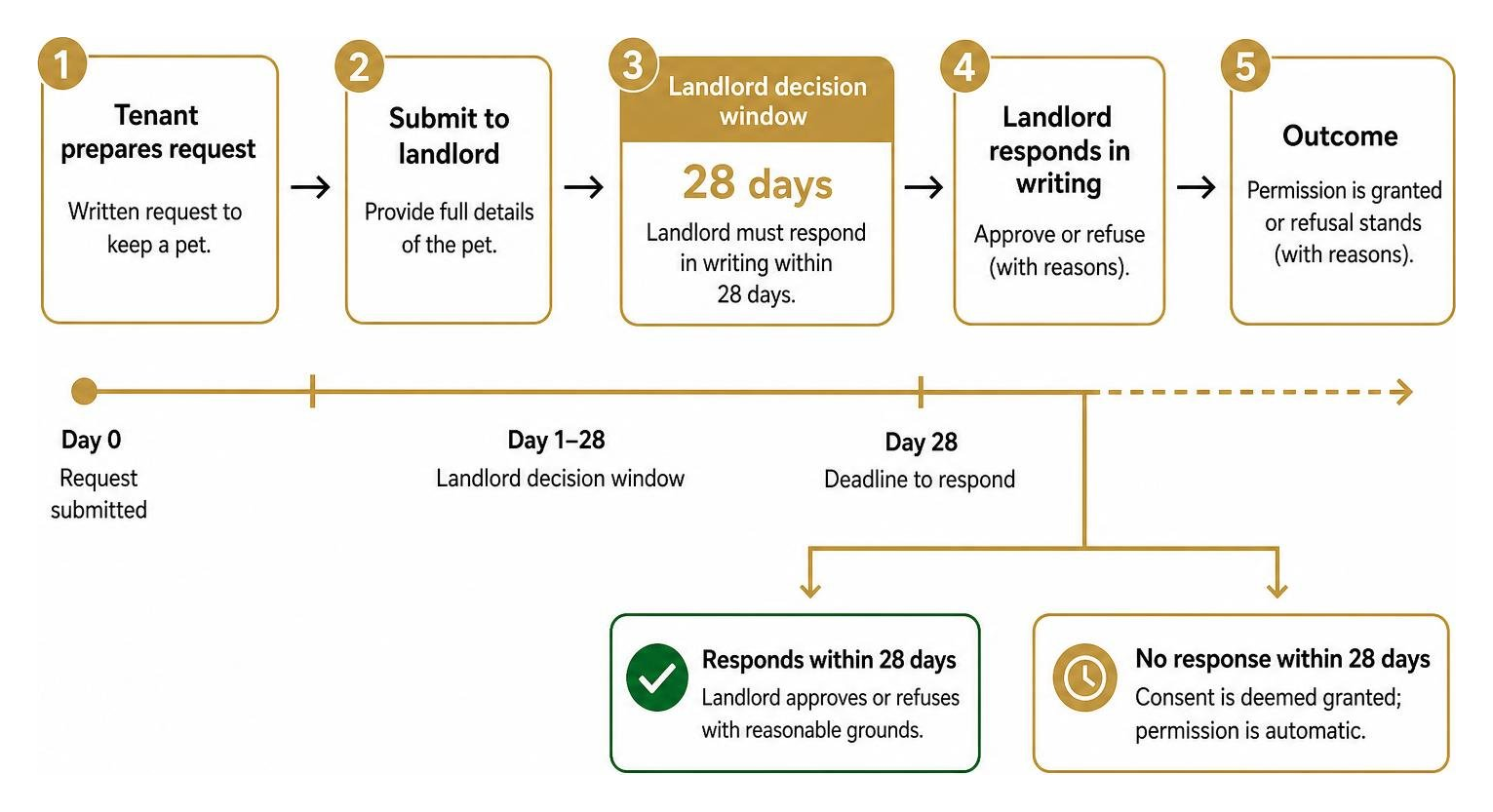
Under the current legal framework, tenants have a right to request permission to keep a pet. Once a formal written request is submitted, the landlord must respond in writing within 28 days. If the landlord fails to respond within this timeframe, consent is deemed to be granted. Landlords cannot charge a fee for processing the request, nor can they automatically refuse without demonstrating reasonable grounds. To explore how these rules apply in practice, check out this Guide to pets in apartments and read up on the Legal updates on rental pet rules.
Leasehold Restrictions and Head Leases
While the Renters' Rights Act 2025 provides significant protection for renters, leasehold properties introduce an entirely separate layer of legal contracts. In a leasehold flat, the landlord who rents out the property is actually a leaseholder who answers to a freeholder or a Resident Management Company (RMC) under a document called the "head lease."
If the head lease contains an absolute prohibition against keeping animals, this restriction remains legally binding. The Renters' Rights Act does not override the terms of a head lease. Therefore, if a freeholder has banned animals in the building, the landlord has a legitimate and legally binding reason to refuse a tenant's request.
For leasehold owners who live in their own flats, the head lease is the primary document that dictates what is permitted. If the lease requires prior written consent from the freeholder, the leaseholder must obtain this before bringing an animal home. Breaching a restrictive covenant in a lease can lead to serious legal consequences, including injunctions or, in extreme cases, forfeiture of the lease.
Reasonable Grounds for Refusing Pets in Flats
The law does not grant an absolute right to keep animals; rather, it grants a right to request permission, which cannot be unreasonably withheld. Landlords and freeholders can refuse a request if they have objective, justifiable reasons.
Common reasonable grounds for refusal include:
- Property Size and Layout: A small studio flat without outdoor access is generally unsuitable for highly active animals that require substantial space.
- Head Lease Restrictions: As noted, if the superior lease of the building prohibits animals, the landlord cannot legally grant permission.
- Health and Safety: If another resident in a shared House in Multiple Occupation (HMO) has documented, severe allergies to animal dander, this can constitute a valid ground for refusal.
- Animal Welfare: If the environment is deemed detrimental to the animal's physical or mental health, or if local authority limits on animal numbers are exceeded, the request may be denied.
Legal Rights, Deposits, and Assistance Animals
Understanding the financial and equality-focused legislation surrounding housing is essential for both residents and housing providers. Rules regarding security deposits and the legal definition of service animals are strictly regulated to protect individuals from discrimination and unfair fees. For more information on navigating these options, view this resource on Information on pet-friendly rentals.
Service and Assistance Animals vs Pets
It is critical to distinguish between companion animals and assistance animals. Under the Equality Act 2010, assistance animals—such as guide dogs for visually impaired individuals or hearing dogs for deaf individuals—are not legally classified as pets.
Landlords have a legal duty to make "reasonable adjustments" for disabled individuals. Consequently, a landlord cannot refuse an assistance animal under a standard "no pets" policy, and any terms in a lease or tenancy agreement restricting animals do not apply to them. Furthermore, landlords cannot charge additional fees or pet rent for an assistance animal, as doing so would constitute unlawful discrimination.
Financial Regulations and Pet Fees
The Tenant Fees Act 2019 strictly regulates the payments that landlords can require from tenants in England. Security deposits are capped at a maximum of five weeks' rent for properties with an annual rent below a specified threshold.
- Deposit Caps: Landlords cannot request an additional "pet deposit" that pushes the total deposit beyond the five-week legal limit.
- Pet Insurance: During the legislative debates for the Renters' Rights Act, proposals to allow landlords to mandate that tenants purchase pet insurance were rejected. Landlords cannot require tenants to buy insurance as a condition of tenancy, as this would violate the Tenant Fees Act.
- Pet Rent: Landlords are permitted to charge a slightly adjusted monthly rent to cover the wear and tear associated with animals, provided this is agreed upon upfront and clearly stated in the tenancy agreement.
Practical Tips for Living with Pets in Flats

Living harmoniously in a shared building requires proactive management to ensure that animals remain healthy, content, and do not disturb other residents. Taking the time to pet-proof the home and manage daily routines makes a significant difference. For a complete guide to preparing a home, consult this Ultimate pet-friendly apartment guide and read these Tips for creating harmony in shared buildings.
Managing Noise and Neighbor Relations with Pets in Flats
Noise is the most common source of friction between animal-owning tenants and their neighbors. Dogs that bark excessively due to separation anxiety or boredom can quickly lead to formal complaints.
To maintain positive neighbor relations, consider the following strategies:
- Routine Exercise: Meeting an animal's physical and mental stimulation needs is the most effective way to prevent nuisance barking. A tired dog is generally a quiet dog.
- Soundproofing: Placing thick rugs with sound-absorbing underlays on hard floors can significantly reduce the sound of paws clicking or toys dropping, which is particularly important for those living on upper floors.
- Proactive Communication: Introducing the animal to immediate neighbors can foster goodwill. If neighbors know they can speak directly to the resident about any minor noise issues, they are less likely to file formal complaints with building management.
- Communal Area Etiquette: Always keep dogs on a lead in shared corridors, lifts, and lobbies. Ensure that any mess in shared outdoor spaces is cleaned up immediately.
Creating a Pet-Friendly Indoor Environment
A flat can be a wonderful environment for up to two animals if the space is utilized effectively.
- Vertical Space: Cats benefit immensely from vertical territory. Installing cat trees, wall-mounted shelves, and window perches allows them to explore and feel secure without taking up valuable floor space.
- Litter Tray Maintenance: For feline residents, maintaining hygiene is vital for odor control. It is recommended to have at least two litter trays per cat, which should be scooped twice daily and deep-cleaned on a weekly basis.
- Designated Zones: Establish clear, predictable zones for feeding, sleeping, and playing. This structure helps animals feel secure and reduces anxiety-induced behaviors.
- Durable Materials: Choose hard-wearing, non-porous flooring options such as high-quality vinyl or laminate, which are easier to sanitize than carpets. Protect furniture with washable throws to manage shedding and dander.
How Tenants Can Secure Approval for a Pet
When seeking permission from a landlord or freeholder, presenting a well-prepared case can dramatically increase the likelihood of approval. Demonstrating responsibility and transparency reassures property owners that their investment will be respected. To view specific examples of animal-welcoming communities, see these Details on apartments that accept animals.
Preparing a Comprehensive Pet CV
A "Pet CV" is an excellent tool for summarizing an animal's behavior, health, and history. Providing this document voluntarily shows a high level of organization and responsibility.
A comprehensive Pet CV should include:
- Basic Details: Name, breed, age, and a photograph of the animal.
- Medical Records: Proof of up-to-date vaccinations, flea and worming treatments, and microchip registration details.
- References: Written references from previous landlords confirming that the animal did not cause damage or noise issues. A reference from a veterinary professional or a certified animal trainer is also highly persuasive.
- Care Plan: Details of who will care for the animal during the day if the resident works away from home (e.g., dog walkers or daycare services).
Negotiating with Landlords and Freeholders
If a landlord is hesitant, open communication and flexible proposals can help bridge the gap:
- Trial Periods: Propose a written agreement containing a trial period (e.g., three months), after which the landlord can review whether any noise or damage issues have arisen.
- Professional Cleaning Commitment: Offer to have the carpets cleaned to a professional standard at the end of the tenancy to address any allergen or odor concerns.
- Lease Variations: For leaseholders, engaging in an open dialogue with the freeholder or RMC about varying a restrictive covenant—perhaps by offering to pay the administrative cost of a formal license to keep an animal—can resolve legal roadblocks.
Frequently Asked Questions about Pets in Flats
Can a landlord blanket ban pets in a flat?
No. Under the Renters' Rights Act 2025, blanket bans on animals in private tenancies are void. Landlords must consider every request individually and cannot unreasonably refuse consent. Additionally, under the Consumer Rights Act 2015, unfair terms that do not allow for a case-by-case assessment can be legally challenged.
What are valid reasons for a landlord to refuse a pet?
Legitimate reasons for refusal include head lease restrictions that prohibit animals in the building, the property being too small or lacking appropriate ventilation for the specific animal, documented health concerns (such as severe allergies of other residents in a shared HMO), or local authority regulations regarding animal welfare and space.
Can landlords charge extra pet deposits?
No. The Tenant Fees Act 2019 caps security deposits at five weeks' rent. Landlords cannot request an additional deposit that exceeds this cap to cover potential animal damage. However, landlords and tenants can agree on a slightly adjusted monthly rent to cover general wear and tear, provided this is established before signing the lease.
Conclusion
Finding the perfect balance between urban convenience and a welcoming environment for companion animals is entirely achievable with the right approach. Knowing the legal frameworks, from lease covenants to modern rental reforms, ensures that residents can secure their homes with confidence and peace of mind.
For those seeking a premium lifestyle in Chicago, IL, The Rosie Apartments by Flats® offers luxury apartments for rent in the vibrant Pilsen neighborhood. Combining modern amenities with premium finishes, the building features exceptional shared amenities—including a rooftop deck, an outdoor pool, and dedicated facilities designed to make living with up to two animals seamless and enjoyable.


