



Finding Apartments That Accept Animals: What Renters Need to Know
Apartments that accept animals are in higher demand than ever — and for good reason. According to a recent Gallup poll, 44% of Americans own a dog and 29% own a cat. That's a lot of renters who need a home that works for their whole family, pets included.
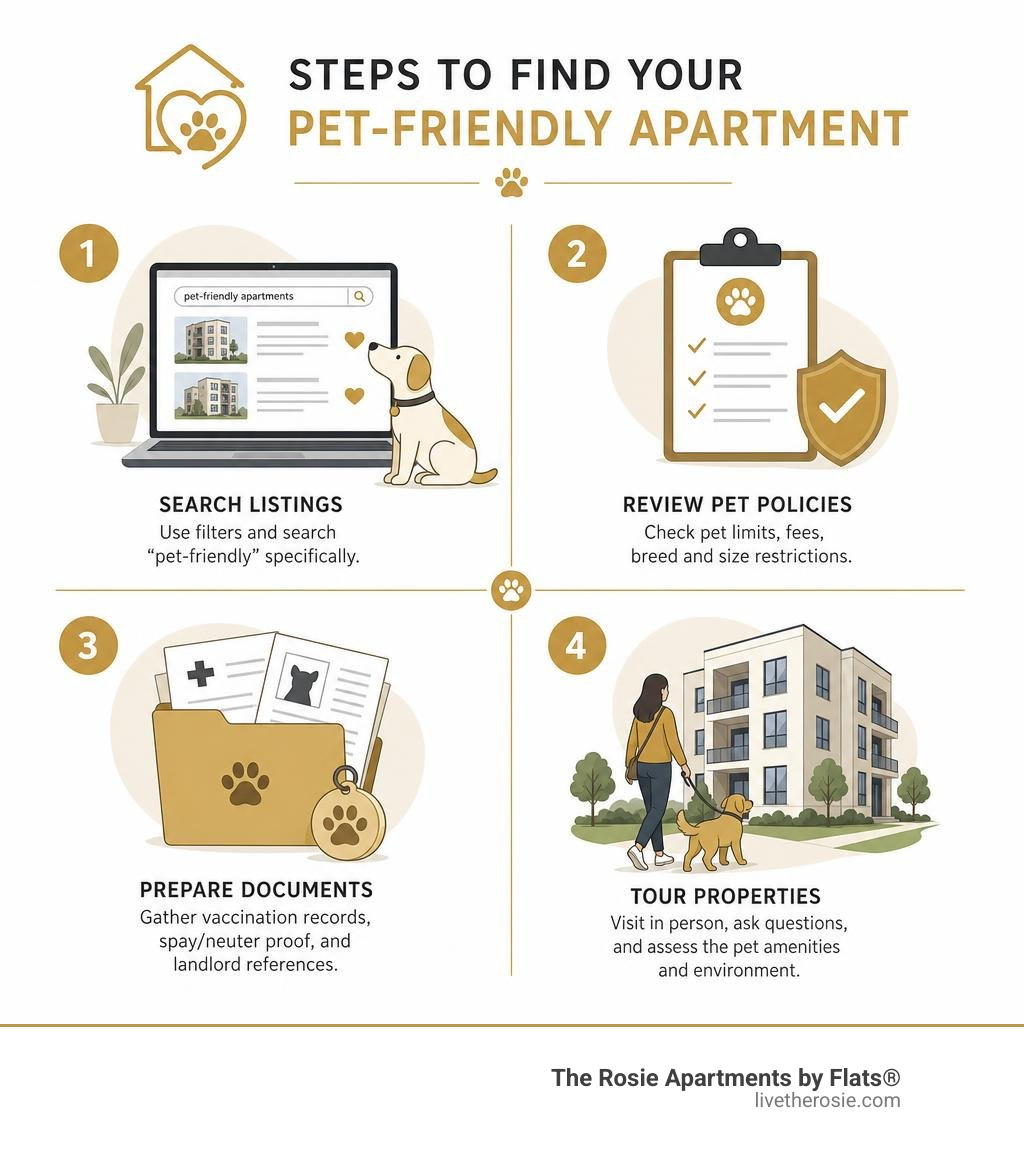
Here's a quick overview of what to expect when searching for a pet-friendly rental:
| What to Know | Quick Answer |
|---|---|
| How to find listings | Use filters on major rental sites; search "pet-friendly" specifically |
| Typical pet limits | Most properties allow up to two pets per unit |
| Common fees | One-time pet fee, refundable deposit, and/or monthly pet rent |
| Breed and size rules | Many communities restrict certain breeds and set weight limits |
| Documents you may need | Vaccination records, spay/neuter proof, and landlord references |
| Legal protections | Service animals and emotional support animals have separate rights under the Fair Housing Act |
Finding the right place takes more than just a quick search. Pet policies vary widely between buildings — from strict breed restrictions to welcoming, amenity-rich communities with dog parks and pet wash stations. Knowing what to look for, what to prepare, and what questions to ask can make the whole process much smoother.
This guide breaks it all down so you can find a rental that's a great fit for you and your pet.
Navigating the Search for Apartments That Accept Animals

The search for a new home begins long before packing any boxes, especially when moving with a pet. Finding properties that welcome animals requires a strategic approach, as the term "pet-friendly" can mean very different things from one landlord to the next.
To start, online rental portals are invaluable tools. Using specific search filters for cat- or dog-friendly listings helps narrow down the options immediately. Platforms like the Chicago IL Pet Friendly Apartments - 10010 Rentals - Zillow directory allow prospective tenants to filter out properties that do not accommodate animals, saving hours of unnecessary inquiries. For more tips on navigating these platforms, the Pet Friendly Apartments Near Me Guide offers an excellent roadmap for refining a localized search.
When evaluating different property types, it is important to look beyond the basic listing description. High-rise buildings, walk-ups, and courtyard buildings each offer different lifestyles for animals. For instance, a high-rise might require taking an elevator every time a dog needs a bathroom break, whereas a garden-level unit or courtyard apartment might offer more immediate outdoor access.
Direct communication with leasing offices or landlords early in the process is essential. Even if a listing states that pets are allowed, asking detailed questions about their specific rules during the initial call or email prevents surprises during the application stage.
Comparing Large Communities and Private Landlords
The experience of renting with a pet can differ significantly depending on whether the property is managed by a large corporate real estate firm or an individual private landlord.
Large Pet Friendly Apartment Complexes typically have highly structured, standardized pet policies. The advantages of renting in these communities include:
- Clear, written guidelines: Rules regarding pet behavior, designated relief areas, and restricted zones are clearly outlined in the lease.
- On-site amenities: Many modern, professionally managed communities feature dedicated pet amenities, such as fenced dog areas or washing stations.
- Streamlined applications: The screening process often utilizes standardized third-party pet verification services, making the approval process predictable.
On the other hand, private landlords or owners of smaller multi-family buildings often operate with more flexibility. While they may not offer specialized on-site amenities, private landlords are sometimes more willing to evaluate pets on an individual basis rather than enforcing rigid weight or breed rules. However, their application processes can be less standardized, and pet agreements may need to be negotiated and drafted manually to ensure both parties are protected.
Regional Differences in Rental Markets
Rental markets vary across the country, and local dynamics heavily influence how easy it is to find pet-friendly housing. In highly dense urban environments like Chicago, IL, space is at a premium, which influences the types of pet policies buildings enforce.
In some neighborhoods, pet-friendly housing is incredibly common due to high demand from residents who prioritize walkable streets and local parks. In other areas, older building structures or strict condominium association rules can make finding a pet-accepting unit more challenging. Understanding these local variations helps renters target neighborhoods where landlords are naturally more receptive to hosting animals. Additionally, local lease agreements in specific municipalities may contain unique clauses regarding pet damage, renter liability, and noise complaints that tenants must review carefully.
Understanding Pet Policies and Community Rules

Before signing a lease, understanding the exact rules of the community is vital. A property that is labeled "pet-friendly" still requires tenants to adhere to strict guidelines designed to keep the peace and maintain clean, comfortable living conditions for all residents.
Every pet-friendly lease should include a specific pet addendum. This legal document details the tenant's responsibilities, including leash rules, waste disposal requirements, and noise policies. Standard community rules typically dictate that pets must be kept on a leash in all common areas, such as hallways, lobbies, and outdoor pathways. Furthermore, residents are expected to clean up after their animals immediately, with many modern complexes utilizing waste management policies to enforce cleanliness. To explore how these agreements are structured, refer to the Pet Friendly Rentals Guide 2026.
Standard Breed and Weight Limits in Apartments That Accept Animals
Even within apartments that accept animals, landlords frequently enforce limitations regarding the size and breed of dogs permitted on the property. These restrictions are often driven by the property's commercial liability insurance policies rather than the landlord’s personal preferences.
Common restrictions include:
- Weight limits: Many properties establish a maximum weight limit for dogs, often restricting pets to under 25, 50, or 75 pounds.
- Breed restrictions: Specific breeds associated with higher insurance risks are commonly restricted from rental communities.
- Atypical pets: Exotic animals, certain reptiles, and specific rodent species are almost universally prohibited in standard residential leases.
Reviewing these guidelines before paying application fees is crucial to ensure a pet meets all community standards.
Pet Deposits, Fees, and Monthly Rent
Renting with an animal usually comes with additional financial obligations. Landlords charge these fees to offset the wear and tear that animals can cause to carpets, flooring, and common areas. It is important to understand the distinctions between the various types of charges:
- Pet Deposit: This is a sum paid at move-in that is specifically designated to cover any physical damage caused by the pet. Depending on local rental laws, pet deposits may be refundable at the end of the lease term, provided the apartment is returned in good condition.
- Pet Fee: Unlike a deposit, a pet fee is a one-time, non-refundable charge paid at the start of the lease. This fee grants the tenant permission to house the animal but does not cover the cost of any actual damage.
- Pet Rent: This is an ongoing monthly charge added to the tenant's base rent. Like pet fees, pet rent is non-refundable and is considered a premium charge for living with an animal.
For a deeper dive into how these fees are assessed and how they impact the overall cost of tenancy, the guide on Pets In Apartments provides comprehensive details.
Key Amenities to Look For in Pet-Friendly Communities
When searching for apartments that accept animals, the physical amenities of the building can dramatically improve the daily routine of caring for a pet. Modern residential developments increasingly prioritize pet-centric features to attract dedicated pet owners.
When touring properties, look for built-in conveniences that make daily care easier. Key features to keep an eye out for are detailed in the guide on Amenities To Look For In Pet Friendly Apartment, which highlights how specialized spaces elevate the rental experience.
On-Site Facilities in Apartments That Accept Animals
The most desirable pet-friendly buildings go beyond simply permitting animals; they actively accommodate them with dedicated on-site facilities.
- On-Site Dog Runs: Fenced, well-maintained outdoor spaces within the property allow dogs to stretch their legs and relieve themselves without requiring a long walk away from home.
- Pet Wash Stations: Dedicated washing and grooming stations equipped with professional-grade tubs and dryers are incredibly convenient, especially during rainy or snowy seasons when pets return from walks with muddy paws.
- Convenient Waste Stations: Properties that place waste bags and disposal bins throughout the grounds make it effortless for residents to keep the community clean.
Neighborhood Benefits for Pet Owners
The area surrounding the apartment building is just as important as the building itself. A neighborhood that supports pet ownership makes a significant difference in a pet’s quality of life.
In neighborhoods like Pilsen in Chicago, IL, residents enjoy proximity to tree-lined streets, local parks, and businesses that welcome animals on outdoor patios. Having access to trusted local veterinarians, pet supply stores, and professional dog-walking services nearby adds immense convenience to a pet owner's routine. To learn more about living in this vibrant, pet-welcoming area, check out the guide on Pet Friendly Living Pilsen.
How to Prepare Your Rental Application with Pets
Securing a spot in a highly competitive rental market requires presenting a strong, professional application. When applying for apartments that accept animals, taking proactive steps to demonstrate that a pet is well-behaved and responsible can set an applicant apart from the crowd.
Landlords want reassurance that hosting an animal will not result in property damage, noise complaints, or conflicts with other residents. Presenting a complete pet profile alongside standard rental documents shows professionalism and respect for the property. For advice on positioning an application for success in premium buildings, review the guide on Pet Friendly Luxury Apartments.
Creating a Pet Resume and Gathering Documentation
A pet resume is a highly effective tool that summarizes all relevant details about an animal in an organized, easy-to-read format. A great pet resume should include:
- Basic Information: The pet's name, breed, age, weight, and a clear, friendly photograph.
- Medical Records: Up-to-date vaccination records (especially rabies and distemper) and proof of spay or neuter status.
- Licensing: Proof of local municipal pet registration or licensing, where applicable.
- Behavioral Habits: A brief description of the pet’s daily routine, temperament, and how they behave when left alone.
Landlord References and Training Certificates
To provide extra reassurance to a prospective landlord, backing up a pet resume with external verifications is incredibly helpful.
- Previous Landlord References: A brief letter from a previous landlord confirming that the pet did not cause damage, bark excessively, or prompt complaints from neighbors is one of the strongest assets an applicant can have.
- Training Credentials: Certificates showing completion of obedience training classes or programs like the AKC Canine Good Citizen certification demonstrate a commitment to good behavior.
- Meet-and-Greets: If a landlord is on the fence, offering a brief in-person meeting with the pet can help dispel any concerns about temperament or behavior.
Legal Rights and Responsibilities for Tenants
Renting with animals involves navigating a variety of federal, state, and local laws. Understanding these legal frameworks ensures that both tenants and landlords understand their rights and duties.
Under the federal Fair Housing Act (FHA), individuals with physical or mental disabilities have the right to request reasonable accommodations for assistance animals, which include both service animals and emotional support animals (ESAs). Under the FHA, assistance animals are not classified as pets. Consequently, standard pet policies—such as breed restrictions, weight limits, and pet fees or monthly pet rent—do not apply to them. However, tenants must provide proper documentation from a licensed healthcare professional to qualify for these accommodations, and the animal must not pose a direct threat to the health or safety of others.
For standard pets, tenants must adhere strictly to local ordinances, including leash laws, mandatory vaccination requirements, and noise regulations. Landlords retain the right to enforce lease terms regarding pet behavior, and failure to comply with these rules can result in lease violations or eviction proceedings.
Frequently Asked Questions about Pet-Friendly Rentals
What is the difference between a pet fee, pet deposit, and pet rent?
A pet deposit is a sum paid at move-in that may be refundable at lease-end if no pet damage occurs. A pet fee is a one-time, non-refundable charge paid upfront for the privilege of housing a pet. Pet rent is a non-refundable monthly fee added to the base rent throughout the duration of the lease.
How many pets are typically allowed in a rental unit?
Most pet-friendly apartment communities enforce a strict limit of up to two pets per apartment unit. These policies are designed to maintain comfortable living conditions and manage wear and tear on the property.
Can a landlord legally refuse to rent to me because of my pet?
Yes. Unless the animal is a documented service or emotional support animal protected under the Fair Housing Act, landlords have the legal right to enforce "no-pet" policies, set weight limits, or restrict specific breeds from their properties.
Conclusion
Finding the perfect apartment for a household that includes animals requires careful research, preparation, and an understanding of community guidelines. By focusing on properties with clear pet policies, excellent on-site amenities, and welcoming neighborhoods, renters can ensure a smooth transition to their new home.
For those seeking an exceptional living experience in Chicago, IL, The Rosie Apartments by Flats® offers luxury apartments for rent in Chicago's Pilsen neighborhood. Combining urban convenience with luxurious living, the property features modern amenities, premium finishes, a rooftop deck, an outdoor pool, and pet-friendly facilities designed to accommodate modern lifestyles. To explore available units and find the perfect match, visit the Pet Friendly Apartments Chicago Ultimate Guide.


