



Why Finding Apartments for Rent That Are Pet Friendly Is Worth the Extra Search
Apartments for rent that are pet friendly are more in demand than ever — and with good reason.
If you just need a quick overview of what to look for, here it is:
What makes an apartment truly pet-friendly?
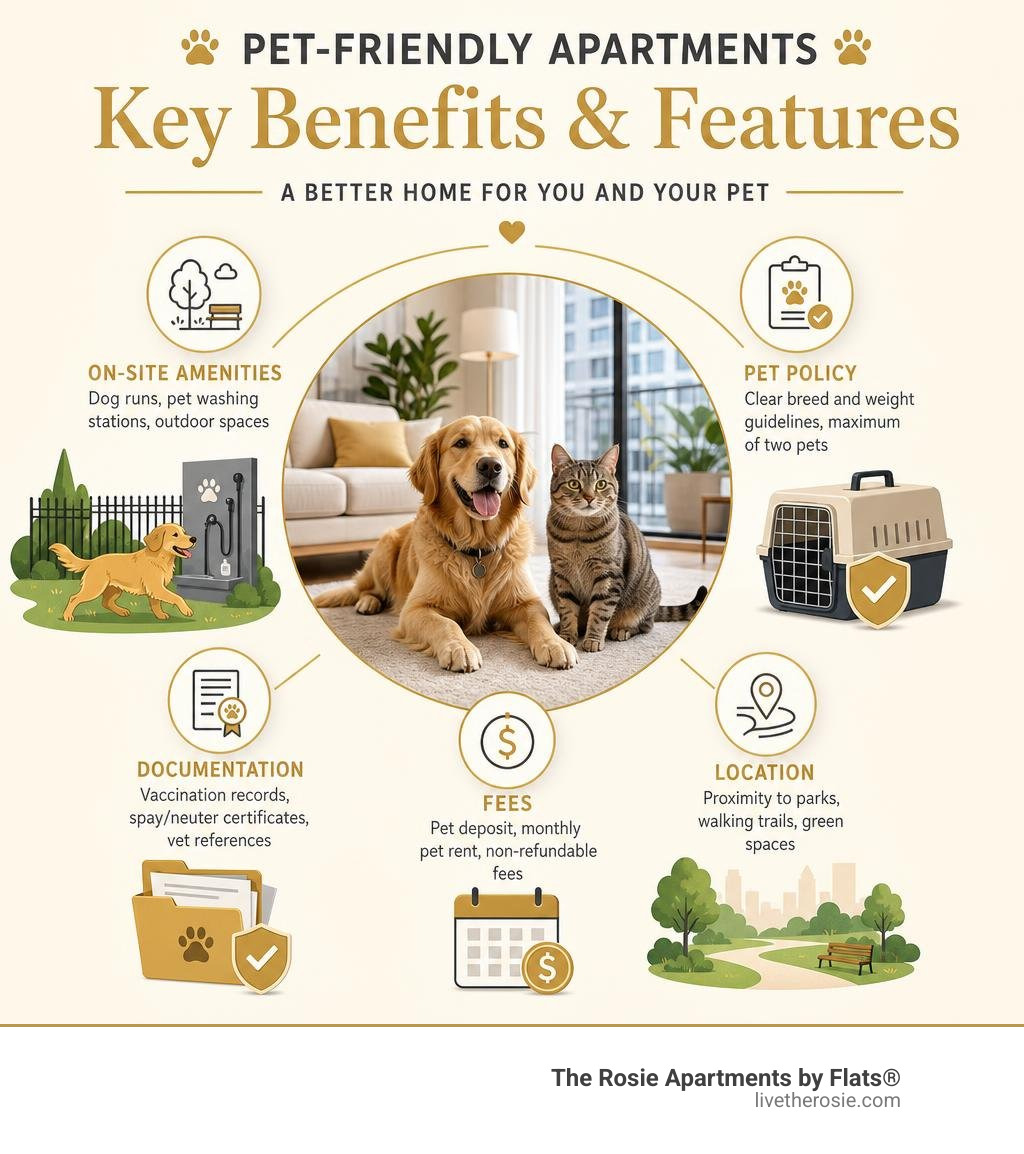
| Feature | What to Look For |
|---|---|
| On-site amenities | Dog runs, pet washing stations, outdoor spaces |
| Pet policy | Clear breed and weight guidelines, maximum of two pets |
| Documentation | Vaccination records, spay/neuter certificates, vet references |
| Fees | Pet deposit, monthly pet rent, non-refundable fees |
| Location | Proximity to parks, walking trails, green spaces |
In Chicago alone, there are over 8,000 pet-friendly rental listings — yet not all of them are created equal. Some buildings simply tolerate pets. Others are genuinely built around pet-owning residents, with dedicated amenities, clear policies, and pet-welcoming communities.
The difference matters a lot when you're sharing a home with an animal companion.
Whether you have a dog or a cat, navigating pet policies, fees, and amenity options can feel overwhelming. This guide breaks down exactly what to look for — and why the right pet-friendly apartment can make urban life better for both you and your pet.
1. Access to Specialized On-Site Amenities
Renting a home that welcomes animal companions is about more than just obtaining permission to keep a pet indoors. True pet-friendliness is defined by the physical environment and specialized features designed to make daily care convenient and stress-free. In modern residential developments, developers increasingly incorporate high-quality, dedicated spaces that cater directly to the needs of domestic animals.
Among the most valued features in modern developments are dedicated pet washing stations, on-site dog runs, and secure outdoor spaces. These elements eliminate many of the common logistical challenges associated with urban pet ownership, such as tracking mud into living spaces or traveling long distances for daily exercise. Identifying these features early in a housing search can significantly enhance the long-term utility of a rental property. For a detailed breakdown of what to prioritize during a search, review this resource on Amenities to Look for in Pet Friendly Apartment.
Key Features of Apartments for Rent That Are Pet Friendly
When evaluating apartments for rent that are pet friendly, certain specialized features distinguish premium properties from standard rentals.
- Pet Spas and Washing Stations: These dedicated grooming areas are equipped with professional-grade tubs, handheld sprayers, and blow dryers. Utilizing an on-site pet spa prevents the mess of bathing a dog in a standard bathroom tub, keeping personal living spaces clean and reducing plumbing strain.
- On-Site Dog Runs and Play Areas: Fenced, well-maintained dog runs allow pets to exercise and socialize without leaving the property. Modern developments often utilize specialized drainage turf designed specifically for heavy pet use, ensuring a sanitary environment year-round. For more information on how these spaces are designed, consult the Chicago Apartments Complete Dog Runs Guide.
- Landscaped Courtyards and Relief Areas: Courtyards featuring pet-safe landscaping provide convenient options for quick outdoor breaks, particularly during inclement weather or late-night hours.
These on-site amenities create a highly functional living environment where daily routines become more efficient. Rather than scheduling external grooming appointments or traveling to distant parks for basic exercise, residents can access professional-grade facilities just steps from their front doors.
2. Clear and Transparent Pet Policies
A successful rental experience relies on clear, transparent rules. Well-defined pet policies protect the interests of property owners, residents, and the animals themselves. When pet guidelines are explicitly detailed in a lease agreement, it minimizes the potential for future misunderstandings and ensures a harmonious living environment for all community members.
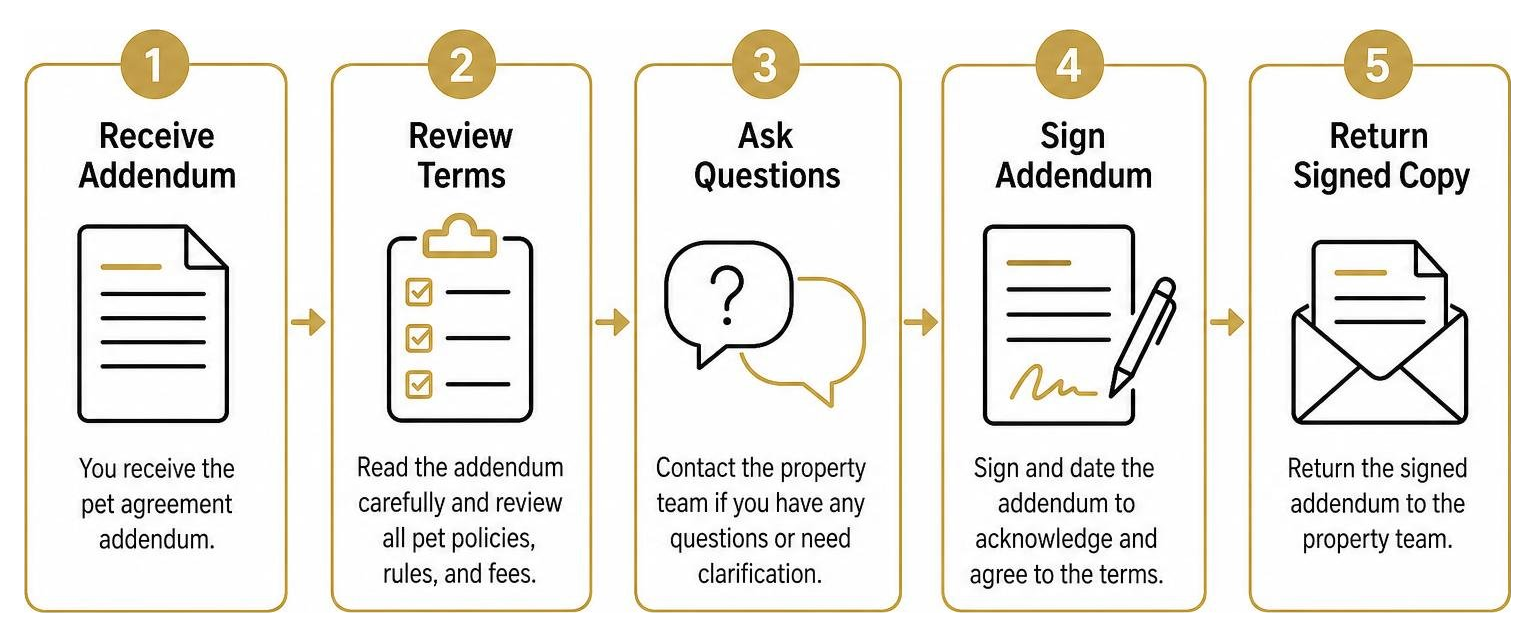
A standard pet agreement functions as a formal addendum to the lease. This document outlines the responsibilities of the resident, including waste disposal rules, leash requirements in common areas, and noise control expectations. Typically, these agreements specify a maximum of two pets per household, which helps maintain building sanitation and prevents overcrowding. For a comprehensive overview of how these agreements are structured, refer to the Pet Friendly Rentals Guide 2026.
Standard Guidelines for Apartments for Rent That Are Pet Friendly
Property management companies and private housing providers establish specific guidelines to manage liability and maintain building standards. Understanding these standard parameters is essential when searching for apartments for rent that are pet friendly:
- Weight Limits: Many properties establish maximum weight limits for animals to ensure they are suited to apartment living. These limits are typically evaluated per pet or as a combined household limit.
- Breed Restrictions: Insurance policies often dictate specific breed restrictions for residential properties. Standard restriction lists frequently include breeds categorized as high-liability, such as Akitas, Chow Chows, Doberman Pinschers, German Shepherds, and Rottweilers.
- Pet Screening Processes: Many modern communities utilize third-party digital screening services. These platforms require applicants to create a profile for their pet, inputting health records, photos, and behavioral history to assess suitability for the community.
Reviewing these criteria prior to submitting an application prevents unnecessary fees and ensures the selected property aligns with the pet's profile. Comprehensive details on navigating these requirements can be found in the Ultimate Pet-Friendly Apartment Guide 2026.
3. Seamless Integration with Urban Lifestyles
Living in a major metropolitan area with a pet requires careful consideration of geographical convenience. Urban pet ownership is highly dependent on the surrounding neighborhood infrastructure. High-density residential developments that accommodate pets are frequently situated in areas that offer seamless integration with daily transit, recreation, and community spaces.
Transit-oriented developments are particularly advantageous for pet owners. These properties are located near major public transportation hubs, reducing commute times and leaving more time for pet care. Additionally, proximity to neighborhood parks and local walking trails ensures that daily exercise routines can be completed easily.
In Chicago, neighborhoods like Pilsen showcase how urban design can support pet owners. Pilsen features walk-up residential streets, local green spaces, and a highly walkable layout that makes daily dog walking highly accessible. To learn more about neighborhood-specific benefits, explore the guide on Pet-Friendly Living Pilsen.
4. Simplified Moving and Transition Processes
Relocating to a new residential property can be a stressful experience for both humans and animals. However, choosing a property that is intentionally designed for pet living simplifies this transition. Preparedness is the most effective way to ensure a smooth application and move-in process.
To secure approval quickly, applicants should gather all necessary pet documentation in advance. Housing providers routinely require comprehensive records to verify the health and behavior of the animal. Having these files organized prevents delays in competitive rental markets. Helpful strategies for managing this transition can be reviewed in the Pet Friendly Apartments Tips 2026.
Key documents to prepare include:
- Vaccination Records: Up-to-date immunization history, particularly for rabies and DHPP, is standard for almost all rental communities.
- Spay and Neuter Certificates: Many housing providers require proof of sterilization to minimize behavioral issues and territorial marking.
- Veterinarian References: A brief letter from a licensed veterinarian confirming the pet's general health, temperament, and regular care history can serve as a strong recommendation.
- Prior Landlord References: Written confirmation from previous property managers stating that the pet caused no property damage or noise disturbances is highly persuasive during the screening process.
5. Finding Apartments for Rent That Are Pet Friendly in Chicago
Chicago, IL, represents one of the most active rental markets in the country, with a vast inventory of housing options. According to major real estate directory data, Chicago features over 10,000 pet-friendly rental listings, reflecting a strong city-wide demand for pet-inclusive housing. However, finding the right match requires target searching.
When searching for apartments for rent that are pet friendly in Chicago, focusing on specific neighborhoods can yield excellent results. The Pilsen neighborhood, located on the city's Lower West Side, has become a popular destination due to its rich cultural heritage, artistic community, and transit-oriented locations. Properties situated near the CTA Pink Line) or major bus corridors allow residents to commute efficiently while enjoying historic parks and tree-lined streets. For a detailed strategy on navigating the local market, consult the Pet-Friendly Apartments Chicago Ultimate Guide.
Frequently Asked Questions About Pet-Friendly Rentals
What are the typical fees associated with renting with pets?
Renting with pets generally involves additional financial obligations beyond standard security deposits. These fees are designed to offset potential wear and tear on the property and support the maintenance of community pet amenities. Understanding these costs is essential for accurate financial planning:
- Pet Deposits: This is an upfront fee paid at lease signing. Depending on local regulations, pet deposits may be refundable or non-refundable. They are utilized to cover any physical damage caused by the animal to the interior of the unit.
- Monthly Pet Rent: A recurring monthly fee added to the base rent. This fee typically ranges based on the property and the type of pet, helping to cover the ongoing operational costs of pet amenities and waste management services.
- One-Time Pet Fees: A non-refundable fee charged upon move-in to cover administrative costs and professional deep cleaning of the unit upon move-out.
For a detailed breakdown of these financial components, read the Pet Friendly Homes Complete Guide 2026.
What are the benefits of renting in a professionally managed pet-friendly community?
Renting within a professionally managed residential development offers distinct advantages over leasing from private, individual landlords. Professionally managed communities utilize dedicated staff and standardized procedures to ensure a high standard of living:
- Dedicated Property Management: On-site management teams are available to address resident inquiries, coordinate package deliveries, and oversee community operations.
- On-Site Maintenance: Professional maintenance technicians are available to resolve unit issues quickly. In pet-friendly buildings, maintenance staff are trained to interact safely and respectfully with household pets during service visits.
- Consistent Policy Enforcement: Standardized rules regarding leash laws, waste disposal, and noise control are enforced uniformly. This ensures a clean, quiet, and predictable living environment for all residents, whether they own pets or not.
To explore the operational differences in these communities, refer to the resource on Pet-Friendly Apartment Complexes.
What documentation is required during the application process?
To streamline the approval process, applicants should treat their pet's application with the same level of detail as their own. Housing providers require specific documentation to verify compliance with building policies and local health codes:
- Renter's Insurance Policy: Most modern leases require residents to carry liability coverage. For pet owners, this policy must explicitly include coverage for pet-related incidents or property damage.
- Pet Resumes: A concise document detailing the pet's age, breed, weight, training certifications (such as Canine Good Citizen), and behavioral traits. Including a photo of the pet is also standard practice.
- Health and Immunization Certificates: Official documentation from a licensed veterinarian showing that all required vaccinations are current.
For more tips on preparing these documents, see the guide on Pets in Apartments.
Conclusion
Finding the ideal home requires balancing personal preferences with the needs of animal companions. Selecting a property that proactively integrates pet-centric design, clear policies, and convenient neighborhood access ensures a high-quality living experience.
The Rosie Apartments by Flats® offers modern living spaces in Chicago's vibrant Pilsen neighborhood. Designed to combine urban convenience with premium finishes, the development features a robust suite of amenities, including a rooftop deck, an outdoor pool, and dedicated pet-friendly facilities. Situated near transit links and local parks, it provides a highly functional environment for residents and their pets alike.

To explore available floor plans and learn more about the community, visit Pet-Friendly Apartments Chicago.


